Swedish farm grossing $275,000+ EVERY SIX MONTH SEASON! // Ridgedale Permaculture
Updated on
Show Transcript
Chapter 1: Intro
0:13We're a farm that homesteads as well as farms, but our three primary enterprises here are pastured poultry—so meat chickens—and we have pastured egg-mobiles producing eggs and a no-dig market garden.
0:26This farm is half forestry and half pasture, so we run market gardens on fifteen hundred square meters, we run about twelve hundred laying hens typically, and four or five thousand meat chickens in the year.
0:40So a small mixed diverse farm where we can start to close nutrient cycles and also provides full human diet which has been really important to us.
Chapter 2: How did you get started
0:53Well I went to agriculture school when I was 18 to study organic horticulture and crop
0:59production in the UK at an agriculture school there. And I left there with a lot
1:05more questions than answers, so I embarked on a longer global trip looking for people that had different solutions. It took quite some years to find really
1:14working examples and I found it very hard to find people willing to share data, like numbers and facts and figures, and so that's become a key part of this
1:22farm is creating a place that shares the sort of data that I wish I had had access to when I was learning.
Chapter 3: What do you do
1:31Starting a farming business is perhaps the hardest thing you could do.
1:36A lot of young people coming into this kind of business, they're growing up in a world that missed a bunch from a few generations ago. We really wanted to
1:44create a space that was open to people to come and get engaged, so we've tended towards running really long term farmer training, and quite hardcore, you know
1:54more like farm bootcamp. So we really focus on choosing enterprises here that,
1:59A, are symbiotic, but, B, are things that people can come and really learn about tangibly here, get enough experience to then confidently go away and set up according to their own context in their own country.
Chapter 4: Seasonality
2:18So we're farming up here at 59 degrees north, so in the summer months the season comes very quickly. Spring and autumn are very short and it quickly transitions
2:27from dark cold winter to height of summer, and it's quickly winter again, so
2:33frost-free dates here would be... like 6th of June is safe, and 15th of September that
2:39frost is coming back, and that could move a few weeks either direction, so it's a fast and furious growing season here.
2:47So we work long hours in the summer,
2:50but we're also complimented with six months of basically me here for one hour a day, you know collecting eggs, feeding cattle, and that's my workload.
3:01We get up at 6 o'clock, got to open the egg mobiles and they start laying eggs six o'clock because the sun's been up since 4:00, we move the cows and sheep
3:10who cut the grass in front of the egg mobiles, and we time their interactions so that they receive all the fly larvae from the cow manure and follow them
3:19around the pasture like that. Then we move all the boiler chickens and that's quite a big job, and then we basically spend the rest of the day in
3:28the market garden. Market gardens take a lot of hours, so that makes up the majority of the workload here.
Chapter 5: No Dig
3:37So the gardens here are a no dig set up, so we put wood chips down between our beds, and big load of compost in the beginning, these beds
3:45are built straight on top of pasture with perennial weeds and things. We do no dig because it leads to less weeds, less water, and using this wood chip
3:54for pathways it actually helps us soak up excess water, and what we find is that means you're walking around in a clean garden. It means we minimize washing of veg
4:03like salad mixes that we cut with The Greens Harvester, we don't need to wash them because there's no dirt bouncing up on the leaves. And anytime we can minimize washing, we're maximizing shelf life, and it's part of a marketing thing too,
4:16like our farm looks beautiful, and is presentable, and it's the first thing a customer sees when they come into the farm.
4:23We are driving a very high level of economy in a very small space, in a very short growing season, in the middle of nowhere.
4:31We manage to shift about a quarter of a million euros products in a six month production, which we then sell throughout the year like meat products
4:40and eggs. We're able to turn over the value... more than the value of the farm, and the investments we put in the farm, every single six month season that we run.
4:51Having a broad product portfolio really helps. Like when we have fresh chickens for sale in the summer, it's much easier to sell vegetables.
4:59I remember those words of Joel Salatin,
5:01"It's much easier to find a hundred customers that will spend a thousand dollars with you, than to find a thousand customers that will spend a hundred
5:09dollars." And that's certainly my experience of running a mixed diverse farm.
Chapter 6: Microgreens
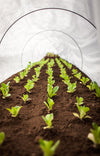
5:20We grow mescaline mix, spicy Asian greens, and arugula.
5:25It's one of the most profitable crops we grow. On a little 10 meter long bed that's 30 inches wide, we're getting 40 kilos in 42 days, so that's a net of
5:36about 500 euros on a tiny little bed, and that used to be painstaking work.
5:42We would cut it with little serrated knives on our hands and knees, and that takes 25
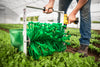
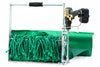
5:48minutes to do well, and what we found with The Greens Harvester is that takes about two minutes flat. That's definitely a game changer for anyone growing greens or microgreens at any kind of scale.
6:02I'm really inspired to spend time in nature watching the ecosystem here develop.
6:09I'm totally motivated by feeding my family amazing food, that's why I wanted to build a farm, I decided that at about 15 years of age. I knew I wanted to bring up kids and raise the family around amazing food.
6:23We've become a little island that nature's moving back into because we're not sprayed and we're not bare ground. We're creating a habitat whilst
6:31producing amazing, diverse food, and that inspires me a lot when I wake up everyday.
Ridgedale Permaculture // The Good Life // Episode 2
Learn how Richard Perkins has created a highly profitable farm by combining pastured poultry and egg production with a no-dig market garden—all in an extremely short growing season and in the middle of nowhere! Learn even more in our full interview with Richard here: https://youtu.be/Edm8tEkS2MI
Ridgedale Permaculture's website: http://www.ridgedalepermaculture.com/
Featured Products
-------------------------------
Shop Related Products