Cover Crops for Market Gardeners: A Practical Guide to Building Healthier Soil
By Jonathan Dysinger and John Dysinger
Updated on
Show Transcript
0:00Cover crops have been a big part of the crop rotation planning here at Bountiful Blessings Farm for many years. And so in this video, we're going to be talking
0:07about some of the tips and tricks for successfully doing cover crops. And we're at the end of August. September is
0:15often times when the cover crops are going in for overwintering plots that aren't getting utilized for winter production. So Dad, give us your tips and tricks for cover crop success.
0:28Well, I will say many market gardens uh don't do much cover cropping because they're just growing so intensively year
0:36round that it's hard to fit them in. And I think if that's the case, then you
0:43have to kind of get your cover crops already digested, so to speak, um with with putting on more compost. Mhm.
0:52But if you have the space and the time,
0:56cover cropping is is a cheap and easy way to build your your soil health. Um,
1:04September is the ideal time to do it. Of course, the challenge is September is also one of the driest months for us
1:13here. So, it means you're going to need irrigation in order to get them up and
1:18and going. But, um, ideally you get your your summer stuff cleared out and and
1:28get the soil in a good good place and then I always just broadcast with my chest spreader.
1:36Mhm.
1:36Um, and so it's just on the ground. You know, you can lose some of your seed to
1:43birds, but I found that I can get good germination just by broadcasting um with with plenty of irrigation.
1:54That's the key. You're you're going out there every day and looking at the seeds and you can see when the the root comes
2:02out when they first germinate and you're looking for them to peg that root down into the ground. And once the root is
2:11down into the ground, then the moisture level is not quite so critical. Mhm.
2:19But you got to keep it good and moist until that point. Um, if you don't have a lot of water and aren't able to
2:27irrigate so much, there are some tricks that you can do using silage tarp.
2:35um just seed your your cover crop and um wet it good, you know, however you need
2:43to do that. And then cover it with the silage tarp, but with the white side up so it's not heating the ground. You
2:52don't want to heat it too much. But you do that and you need to check every day to see what's going on under there. But as soon as you see them germinating,
3:04um, then you pull the cover off and you're up and running. Yeah. And that of course keeps the birds off, too.
3:11Yeah. Let's go back for a second and just talk briefly for those that may be not as familiar with cover crops. Like
3:18um what's the point of cover crops? Why are you doing cover crops? And then uh and then second, what are the most
3:26common types of cover crops like varieties that that you're using? I mean, there's so many reasons for cover cropping. One is just to hold the soil.
3:37You know, if you have any kind of slope.
3:40Yeah. I just hate seeing bare soil in the winter time. Um because, you know,
3:46you're going to lose it. Uh but of course if you have the snow cover or something that's different but anyway
3:54covering the soil keeping it um biologically active you know living roots in the soil is one of the big
4:02mantras of regenerative agriculture. Um as long as you have living roots in the soil they're going to be feeding the
4:10biology and so you're keeping that healthy.
4:15You're adding organic matter. Um, you're holding nutrients, keeping them from being leeched off by by take being taken up by the cover crops.
4:26Um, you're breaking up the soil if it's compacted.
4:32I don't know. I the list goes on. I wasn't prepared to get into all of that, but yeah, there's lots of benefits.
4:41Yeah. Okay. And then what what are the most common crops that you're using for your cover cropping?
4:47Yeah, so the the current um understanding of
4:53cover cropping is that the the more variety of species you put in your cover
5:01rop, the better. And I will give you a name. Green Cover Seeds is a great
5:08company, Christian company that does blends and they do they sell to huge, you know,
5:18big scale farmers, but they also sell in small sizes for home gardeners or market
5:25gardeners. So, a great company to deal with. They've got, you know, winter blends, they've got warm weather blends.
5:33Um, plus you can you can have your own custom blend, which is really neat. I did that last winter because we don't
5:43like to use brasacas much in cover crops cuz we use brasacas
5:49so much elsewise and we found we were encouraging things like harlkan
5:56bugs to stay around too much by having them in the cover crops. So anyway, we took those out of the cover crop. Um,
6:06but I will say this, you can, you know,
6:10you can go to the local co-op and and just make your own blend. And ideally,
6:17you always want to combine at least one legume with one grain or grass.
6:27So, some classic combinations that we have come up with over the years, and it it's all dependent on when you're going
6:36to need your plot in the spring, but um spring oats, and you need to get spring
6:43oats, not winter oats. And um winter peas is the most um
6:51well, they in most winters here, they will winter kill.
6:56Okay? And so if you're trying to get in there early in the spring, do something like spring oats and and winter peas. If
7:06you are are wanting something that'll go a little longer, wheat and crimson clover is a good combination for us.
7:16Um, and these combinations are about time of maturity. So wheat and crimson clover mature are, you know, they're
7:26ready to be turned under at a similar time. And then rye and hairy veetch or
7:33um this last year we did some leino clover um or ladino. I'm not sure how they say it with the rye.
7:42With the rye and that that matured later. That's the latest maturing one.
7:48And are are you doing for those? It was two different varieties on all those. Are you doing like 50/50?
7:54No, cuz you know, I mean, like the grains are much bigger. So, by weight,
8:01ou're going to have a lot more grain. The clovers are are very tiny. Okay. So, you know, for a market garden plot,
8:09you only need a few, you know, a pound or two.
8:12So, how do you calculate the the mix? Um there's a great book that's actually
8:18available online um you know as a as a electronic book or you can get a hard
8:26copy called growing cover crops profit or managing cover crops profitably. Okay.
8:33And that gives you all the seeding rates. They've got charts and um yeah, or you know, if you go to the co-op,
8:41they can tell you recommended seating rates for different ones.
8:46Okay. So, you would basically go off of the seating rate per acre or whatever.
8:50Yeah. And just divide it by calculate do the calculations. Okay.
8:54Cool. All right. And then what's your favorite method for terminating cover crops and and reintegrating all that biomass into the soil?
9:04Yeah, that's a good question that you know it a lot depends on what you're doing next. But what we've been doing
9:11recently is um flail mowing them and then tarping
9:19them and we really like that with silage tarp because that kills everything if there's
9:26any weeds or anything. And when you take the tarp off, you're left with a nice mulch. Mhm.
9:34But I will say I would really highly discourage people
9:40from just planting directly into mulch because from from my experience that mulch will
9:50will keep the weeds down for about a month and then the weeds take over and you have no way of dealing with them. So, you're saying,
9:59just to make sure people understand, a lot of people with like a no till method would just either use a crimper or something to knock the cover crop down
10:08and then go ahead and just plant basically directly into that mass of cover crop that is across the top of
10:15your soil. And it keeps this the weeds at bay for a month. But then after that,
10:20the weeds start coming up and it's almost impossible to do any kind of cultivation because you just can't have all of that biomass that's not been integrated into the soil.
10:31It's been a disaster for us. So that's where we use the quick plant fabric and
10:38put that down. And so that keeps any weeds from from coming up and then we just plant in the holes. Cool.
10:48So, that's worked really well for us. So, flail mower works great. I mean,
10:52that's probably the best way because it really chops it up.
10:55Or you can There are ways to crimp it by hand using a Tpost and Yeah. couple people with a tost just
11:04kind of stepping on it strapped to their foot. Yeah. Yeah.
11:07It's a pretty rudimentary, but it gets the job done.
11:12Yeah. So, all right. Well, hopefully this has given you some valuable and helpful information for planting some cover crops. And if you have questions
11:21that you would like us to address in a future video, feel free to reply back to this email or or comment down below and maybe we'll get to it in a future video.
11:31Until next time, happy growing.
Cover crops are plants grown specifically to protect and build your soil between cash crop plantings. For small-scale market farmers, the simplest approach is to combine at least one legume with one grain — such as spring oats and winter peas for the earliest spring availability — broadcast the seed onto bare ground in September, and terminate with a flail mow and silage tarp before your next planting.
If you've been market farming for any amount of time, you've heard the advice: take care of your soil and your soil will take care of you.
It's easy to say. It's harder to actually do when you're growing intensively and every bed on your farm is spoken for.
Cover crops are one of the most effective and affordable tools for building soil health. But for a lot of market gardeners, the challenge isn't knowing they're important — it's figuring out how to actually fit them into a tight production schedule.
My dad, John Dysinger, has been incorporating cover crops into the rotation at Bountiful Blessings Farm for years. In a recent video, we talked through his approach — from seed selection and planting methods to the termination strategies that have worked (and the ones that haven't). Here's what you need to know.
What Are Cover Crops and Why Do They Matter?
Cover crops are plants grown not for harvest, but to protect and improve the soil between cash crop plantings. They're one of the foundational practices in regenerative agriculture, and for good reason.
Cover crops serve your farm in multiple ways. They hold your soil in place, which is critical if you have any slope at all. Bare soil in winter is soil you're going to lose to erosion. They keep your soil biologically active by maintaining living roots in the ground — one of the core principles of regenerative agriculture. As long as roots are feeding the biology below the surface, your soil ecosystem stays healthy and productive.
Beyond that, cover crops add organic matter, capture nutrients that would otherwise leach away during the off-season, and break up compacted soil. The list of benefits goes on, but the bottom line is this: cover crops are one of the cheapest and most effective ways to build the soil health that makes everything else on your farm work better.
What If You're Growing Too Intensively for Cover Crops?
Here's the honest reality: many market gardens are growing so intensively year-round that it's hard to find a window for cover crops. If that's you, don't beat yourself up about it.
As my dad puts it, if you can't fit cover crops in, you need to get those benefits through other means — primarily by adding more compost. Think of it as getting your "cover crops already digested." You're still building organic matter and feeding soil biology, just through a different path.
But if you have plots that won't be in winter production, September is the ideal time to get cover crops in the ground. Even covering a portion of your farm with a winter cover crop mix makes a meaningful difference over time.
How Do You Plant Cover Crops?
The Broadcast Method
My dad's go-to approach is simple: broadcast seed with a chest spreader directly onto prepared soil after clearing summer crops.
The key to making this work is irrigation. September tends to be one of the driest months for us here in middle Tennessee, and cover crop seed needs consistent moisture to germinate. You'll want to be out there every day checking on your seed. What you're looking for is the first root (the radicle) emerging and pegging down into the soil. Until that root is anchored, you need to keep the soil good and moist. Once it's established, the moisture level becomes less critical.
Yes, broadcasting on bare soil means you'll lose some seed to birds. But with adequate irrigation, you can still get strong germination without any incorporation.
The Silage Tarp Trick (For Limited Water Situations)
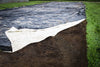
If you don't have a lot of irrigation capacity, here's a trick that works well: seed your cover crop, water it thoroughly, and then cover the area with a silage tarp — but with the white side up.
This is important: white side up. You don't want to cook the seeds by trapping too much heat underneath.
The tarp holds in moisture and keeps birds off the seed at the same time. Check underneath every day, and as soon as you see germination happening, pull the tarp off. You'll be surprised how well this works with minimal watering. My dad started using this method after a particularly dry September when he'd already burned through his irrigation budget on cash crops. It worked so well that it became a standard option in his toolkit.
How Do You Choose a Cover Crop Mix?
The current understanding of cover cropping is that more species diversity in your mix is better. But you don't have to overcomplicate it.
The Golden Rule: At Least One Legume + One Grain
At minimum, you want to combine a nitrogen-fixing legume with a grain or grass. The legume adds nitrogen to the soil while the grain adds biomass and root structure. Together, they give you a much more complete soil-building package than either one alone.
Three Proven Combinations (Matched to Your Spring Timeline)
The right cover crop mix depends on when you need that plot back in the spring. Here are three combinations my dad has used successfully, organized from earliest to latest spring availability:
- Spring oats + winter peas — This is your earliest option. In most winters here in zone 7, both of these will winter-kill, meaning the cover crop dies back on its own during the coldest months. If you need to get into your beds early in spring, this is the combination to use.
- Wheat + crimson clover — This combination matures at a similar time and gives you a good balance of biomass and nitrogen. It goes a bit longer than the oats and peas before it's ready to be turned under.
- Rye + hairy vetch (or ladino clover) — This is the latest-maturing combination. Rye produces substantial biomass, and the vetch or clover adds nitrogen. Use this when you don't need the plot until later in spring.
Where to Source Cover Crop Seed
My dad recommends Green Cover Seeds as a great resource for market gardeners. They're a Christian company that primarily serves large-scale farmers but also sells in small quantities suitable for home and market gardeners. They offer pre-made winter blends, warm weather blends, and even custom blends where you can specify exactly which species you want in your mix.
This custom option came in handy for us. We stopped including brassicas in our cover crop mixes because we already grow brassicas so heavily in production. Having them in the cover crops was encouraging pests like harlequin bugs to stick around. Being able to customize the blend solved that problem. That's the kind of lesson that takes a few seasons of pest pressure to figure out — and one you can skip by thinking through your cover crop families the same way you'd think through your cash crop rotation.
You can also just go to your local co-op and put together your own mix. As long as you're hitting that legume-plus-grain foundation, you're on the right track.
Getting the Seeding Rates Right
For specific seeding rates, my dad recommends the book Managing Cover Crops Profitably, which is available as both a hard copy and a free electronic version online. It includes detailed charts with recommended seeding rates for all the common cover crop species. Alternatively, your local co-op can give you recommended rates for whatever species you're buying.
The basic approach is to take the recommended per-acre rate and scale it down to your plot size. The math is straightforward once you have the base numbers.
How Do You Terminate Cover Crops?
This is where a lot of growers get tripped up. How you terminate your cover crop matters as much as what you planted.
What Works: Flail Mow + Tarp
The method that's worked best at Bountiful Blessings Farm is flail mowing the cover crop and then covering it with silage tarp. The flail mower chops everything up finely, and the tarp creates the conditions for rapid decomposition. When you pull the tarp off, you're left with a nice, broken-down mulch layer and a clean surface ready for planting.
If you don't have a flail mower, you can crimp the cover crop by hand using a T-post — just strap it to your foot and walk the rows, stepping on it to knock the cover crop down. It's rudimentary, but it gets the job done.
What Doesn't Work: Planting Directly Into Standing Mulch
Here's an important lesson from our experience — and one we'd highly encourage you to learn from instead of repeating yourself.
A lot of no-till growers advocate crimping the cover crop and planting directly into the mat of biomass. The idea is that the mulch layer suppresses weeds while your crop grows through it.
In our experience, this has been a disaster. The mulch layer does keep weeds down — for about a month. After that, weeds start pushing through, and you have no way to cultivate because there's too much undecomposed biomass on the surface. You're stuck. My dad tried this multiple times, wanting it to work, and every time ended up fighting weeds by hand in a mat of half-decomposed cover crop. It's not a mistake he makes anymore.
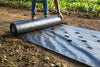
What's worked much better for us is terminating the cover crop, letting it decompose under tarp, and then laying down Quick-Plant Fabric before planting. The fabric keeps weeds suppressed for the entire growing season, and you simply plant through the pre-burned holes. It's a dramatically more reliable system than hoping a mulch layer will hold weeds at bay.
The Takeaway
Cover crops are one of the most cost-effective investments you can make in your soil. They don't require expensive equipment or complicated planning. At their simplest, it's broadcast seed, water it, and let biology do what biology does.
If you have plots going unused this winter, September is the time to act. Pick a legume-grain combination that matches your spring timeline, keep the seed moist until it germinates, and let those living roots feed your soil all winter long.
Your future crops — and your future self — will thank you.
Frequently Asked Questions
Cover crops are plants grown to protect and improve soil between cash crop plantings rather than for harvest. They hold soil in place, keep soil biology active through living roots, add organic matter, capture nutrients that would otherwise leach away, and break up compaction. They're one of the cheapest and most effective soil-building tools available to small-scale growers.
At minimum, combine one legume with one grain. For the earliest spring availability, use spring oats and winter peas — both will winter-kill in most zone 7 winters, leaving your beds ready early. Wheat and crimson clover give you a mid-spring option, and rye with hairy vetch or ladino clover is best when you don't need the plot until late spring.
September is the ideal time for winter cover crops. The seed needs consistent moisture to germinate, and September tends to be dry in many regions, so plan to irrigate daily until the radicle (first root) pegs into the soil. Once the root is anchored, moisture becomes less critical.
Broadcast the seed with a chest spreader directly onto prepared soil and keep it irrigated until germination. If water is limited, try the silage tarp trick: seed the area, water thoroughly, cover with a silage tarp white side up, and check daily. The tarp holds moisture in and keeps birds off. Pull it as soon as you see germination.
The most reliable method is flail mowing followed by covering with a silage tarp. The mower chops the biomass finely and the tarp creates conditions for rapid decomposition. When you pull the tarp, you're left with a clean surface ready for planting. If you don't have a flail mower, you can crimp by hand with a T-post.
Based on over two decades of experience at Bountiful Blessings Farm, planting directly into standing mulch has not worked well. The mulch suppresses weeds for about a month, but then weeds push through and you can't cultivate through the undecomposed biomass. A better approach is terminating the cover crop, decomposing it under tarp, and planting through Quick-Plant Fabric for season-long weed suppression.
If your beds are in constant production, compensate by adding more compost to get the same organic matter and biological benefits. Think of compost as "cover crops already digested." But if you have even a few plots that won't be in winter production, getting a cover crop mix in the ground in September is worth the effort.
Shop Related Products