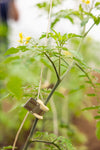
Why the Qlipr Trellising System Is the Best Way to Trellis Tomatoes in a Tunnel
By Jonathan Dysinger and John Dysinger
Updated on
Show Transcript
0:00Hi guys, Jonathan here with Farmers Friend and I'm at Bountiful Blessings Farm with my dad, John. We're going to
0:12be doing a quick overview of the Clipper trellising system and how it stacks up against some other options and why it is
0:19the the favorite trellising choice of Bountiful Blessings Farm. Well, these plants are a little small to really demonstrate. We're in what is it? The
0:29end of April I guess or middle of April. Mid April. Mid April. But um you know traditionally a lot of people have used something like this a tama hook. I mean,
0:42the two that I'm aware of is the toma-hook and the roller hook where you have a bunch of twine, you know, and of course, you got to get this on here in
0:52the first place and then you've got to get this on the cable up there. Yep. And so, you know, you're either on a ladder or I know some people will use one of
1:05those, I don't know what you call them, pincher things to kind of put them up like a tra for picking up trash or something. Yeah. Yeah. Yeah. One of
1:13those things. But the point is it's awkward. And when you need to start lowering and leaning, then you've got to manually, you know, get up there and and
1:26let out some more string. So, it's it's just super inefficient. Let's go back for a second because you said traditionally a lot of people would use
1:34that, but I think a lot of people that are watching might think traditionally you would just use like a cage or some people might be familiar with like the
1:43Florida weave or something like that. So, explain just briefly like what the difference between that method and and these methods with just the the
1:52suckering a single leader that type of maybe maybe just need to cover. Okay. So, well, outside normally, you know, in gardens or whatever, you would use
2:03either a cage. I mean, we found cages were really good. Or, you know, if they're growing commercially outside, they'll do a Florida weave where they've
2:13just got a bunch of stakes and they weave it. But usually that's with determinate tomatoes, which only grow up so big and then they stop. But with if
2:24you've got a long season and you're trying to keep them going, you want to use indeterminate tomatoes which keep growing. And obviously, you know, they
2:34got to go somewhere. They get really tall. They get really tall. And so in a greenhouse you traditionally they have have trellised them suckered them and
2:47you know that's another topic taking off the suckers but um trellising them to to some kind of string and they normally had these clips plastic clips you would
3:00clip around. I could have brought one of those but anyway it's just not a very efficient system. So when we saw this system, it was like, "Wow, this is
3:13amazing." Because you've got this stiff rod. And you know, because these are just starting here. I can't really even move this. They're tight. But the point
3:27is, you can, you know, move this down. You can lower and lean from the ground. So there's no going up and down. Um, and yeah, and you only have two
3:43clips. So, with with a traditional system, you know, by the time the plants grown, you could have a bunch of clips on there. And then what do you do with
3:57it? You know, usually you're using a a a twine that is not compostable and so you end up having to take all those clips off. You know, they
4:10did try to come up with compostable clips and compostable twine. But that had its own issues. you know, they didn't compost very well or
4:23the twine composted too fast and it would end up breaking when you got strain on it. So, there's just a lot of issues with it. Um, this solves pretty
4:35much all of them. The height of the the clipper hooks, let's talk about that. It's important to get the right height because that that was the first mistake
4:42we made when we got them, you know, cuz basically you've got this rod with a a nub on the end kind of a a round. Yeah, if you can zoom in, you can see that.
4:58And that just holds the twine on there. Or they also I don't know if you're selling they have these little adapter things. Yeah, we do have that as well.
5:06Yeah, I haven't tried those. We probably should. Um, and that just holds the twine on there. That that's for getting the plant
5:14from down here up to to the metal. So, my initial thought was, well, let's get the longest ones possible. So, we don't have to be fiddling with
5:26all this twine. Just just start clipping straight to this. But that was just I didn't understand the system. Basically, you want this is your working height
5:39right here. And the newer ones have a little little uh flat spot there. So, this you want to be at a comfortable height for you. You don't want to be
5:50working up here cuz that gets tiring or down here. So, so you want to measure your your rods and you've got different size rods or what do you is is that the
6:05hook? Okay. Um based on the height of your your um whatever you're using cables or whatever. Yeah. And and your height. So, this is where the magic
6:20happens right here. So, for starting out, every clipper has one hook and two clips. And you know, these are replaceable. We
6:32need to replace these. The foam. Yeah, we've been saying that for the last 3 years. How Yeah. How many years have you been using those foams?
6:43Uh, I guess at least four. Okay. Wow. That's pretty good. Yeah. So, they need to be replaced. But anyway, so you've got your string here.
6:56And to start out with, it's not a whole lot different than anything else. You know, you it does take a little bit of learning because with the traditional
7:08clips, you you clip the clip onto the string and then around the plant. Whereas this is the opposite. It goes around the plant and then clips onto the
7:22string. I can't see through here. Yeah, there we go. Like that. Now, obviously, this this is too small. It doesn't need a second
7:33clip there yet, but um it will eventually. So, so let's just imagine that the plant is up here and this is your your your working distance.
7:49So, you have a a clip on here and another one up near the top up here. So, you come along, you you take off any new suckers, and then you just take this
8:07clip off. And then slide this one down with the plant still with the plant still on there. So the plant sliding down. And
8:17then you put the new clip on there. And that's all. And then you would move this down however far you need to. Yeah. Um and that's what you do. And so you can
8:30get into a real rhythm. And I think there's some videos on your website that shows somebody just doing that. And it's very fast and very simple. Yeah. So the
8:43top of the plant essentially is going to be, you know, somewhere six or eight inches or so above the above the top clip. Yeah. And then once it gets to a
8:52certain height, you take the bottom clip off, slide this down, and then this top this clip then goes at the top of the plant. Um, so you're not having to deal
9:04with clips. They're right here. You're just doing this little leap frog thing. And then at the end of the season, you know, to take your plant down, you just
9:15got literally two clips. And it's I mean it's take the clip off, the plant falls off, and then you can just put the clips
9:21right back on and then hang these up in your storage shed or whatever to make just again it's just no hassle with all the the plastic clips and twine, which
9:32you know, if you don't have the budget for the clipper, we do sell the biodegradable twine and the biodegradable plastic clips. So that's
9:40like a more affordable entry point, you know, but I mean definitely in the long run, this is this is going to pay for itself pretty
9:50quickly. Yeah. It's not like these are that expensive. At least last I knew. I don't know. I think it's $3 or so per per hook or something
10:02like that. So I mean it's not cheap, but like you say, it pays off in the long run for sure. So, so a couple other things. So, the first mistake we made
10:12was not getting this right. You know, we got some that were too long. So, you really want to get the right height for that. So, you pro probably would it be
10:22safe to say you want the bottom of the hook like mid torso or something like that? Probably. Yeah. Yeah. Because I mean that the higher it is, the better
10:33in many ways. And I'll explain that in just a minute. But you just don't want to be way up here because that's very awkward. Right. But the importance of
10:42this this location is that the hook rests on the nub on the bottom of the hook and that holds it cuz when you get a lot of tomatoes on there, there's a
10:52lot of weight. And if you're just trying to hold it up here with your clip, it'll slide right by the weight of the tomato. The
11:02bottom clip has to be at the bottom of the hook. needs to be at the bottom of the hook. Yes. To support that point. So, the second thing we did, the mistake
11:11we did, you know, if you're dealing with really vigorous plants, especially like grafted plants, if you're not moving this clip every week, the stem of the
11:24tomato can get so big that you actually can't get these off. really gets me all choked up thinking about it cuz it was uh it was a mess um
11:41trying to get these off when the stem is just so big it can't come off. So yeah, you got to you got to do it weekly and and if you do it weekly, it's
11:54super fast and super efficient. I mean, you need to be suckering probably just about weekly anyways. Yeah. Right. So, I mean,
12:02ideally in in an ideal world, you would be doing this once a week. So, this this small market farms aren't always the ideal worlds. How how long would you say
12:14it would take somebody to come through and lower and lean and sucker a a tunnel this size? You've got We've got eight rows of tomatoes.
12:26I mean, I'm going to say two to three hours. Yeah. If you know, if the tomatoes, if you've stayed on top of it, as you guys have found and
12:38a lot of other growers, we have a lot of growers that have come to us and purchased a few and then the next year come back and purchased a bunch of it.
12:46So that's a that says what I can't imagine why anyone would go with any other system for for market gardeners. I think this is the way to go
12:58hands down for sure. So if you have any questions about the Clipper system, feel free to reach out to our customer support. Check out
13:06farmersfriend.com. Look at Clipper and see if it'll be a good fit for your farm. Until next time, happy growing.
The Qlipr (Clipper) trellising system replaces traditional tomato hooks, roller hooks, and plastic clip-and-twine methods with a stainless steel rod that lets you lower and lean tomatoes from the ground — no ladder, no climbing, no tangled twine. Each plant uses just one hook and two clips that leapfrog up the stem as the plant grows. The result is faster weekly trellising, effortless end-of-season cleanup, and a system that pays for itself within a couple of seasons.
If you're growing indeterminate tomatoes in a tunnel — and most market farmers are — you know that trellising is one of the most time-consuming weekly tasks of the season. Traditional systems work, but they're slow, awkward, and leave you with a mess of plastic clips and non-compostable twine to deal with at the end of the year.
The Qlipr trellising system changed everything at Bountiful Blessings Farm. My dad, John Dysinger, says he can't imagine going back to any other method — and based on the number of customers who buy a few hooks one year and come back for a full set the next, he's not alone.
Here's how it works, how it compares to traditional methods, and the mistakes to avoid.
What's Wrong with Traditional Tomato Trellising?
Before we get into the Qlipr, it helps to understand what it's replacing.
Tomato hooks and roller hooks are the standard greenhouse trellising method. You hang a spool of twine from an overhead cable, clip the twine to the base of the plant, and wind the stem around the string as it grows. When you need to lower and lean the plant, you climb a ladder (or use a grabber tool) to let out more twine from the hook above.
The problems: getting the hooks up on the cable is awkward. Lowering and leaning requires reaching overhead or climbing. And by the end of the season, each plant has accumulated dozens of plastic clips along a length of non-compostable twine. Removing all of that is tedious, time-consuming work.
Compostable clips and biodegradable twine were developed to solve the cleanup problem, but they introduced their own issues — twine that composted too fast and broke under load, or clips that didn't actually break down well in compost.
Florida weave works well for outdoor determinate tomatoes, but indeterminate varieties in tunnels keep growing indefinitely and need a vertical system that can handle continuous height.
Cages are great for gardens and outdoor growing, but they don't work well in a tunnel environment where you're trying to maximize vertical space and maintain airflow.
How Does the Qlipr System Work?
The Qlipr system is elegantly simple: a stainless steel rod with a nub on the bottom end, hung from your overhead cable. Each plant gets one hook and two clips — that's the entire system for the life of the plant.
The Setup
A short length of twine connects the base of the transplant up to the bottom of the steel rod. The rod hangs from your overhead cable. The two stainless steel clips attach around the plant stem and grip onto the rod.
The Weekly Routine
As the plant grows, you work at a comfortable standing height — roughly mid-torso. Each week when you sucker, you also adjust the clips:
Take the bottom clip off. Slide the top clip down (with the plant still attached). Reattach the removed clip at the new top of the plant. Slide the rod down on the cable if needed.
That's it. Two clips, leapfrogging up the stem. The whole operation happens at a comfortable height — no ladder, no reaching overhead, no climbing. You get into a rhythm and it's remarkably fast.
End-of-Season Cleanup
This is where the Qlipr really shines compared to traditional methods. At the end of the season: unclip the two clips, the plant falls off, and you're done. Put the clips back on the hook and hang it in storage for next year. No pile of plastic clips to remove. No tangled twine to untie. No waste.
The hooks and clips are stainless steel and last indefinitely. The foam pads inside the clips are the only consumable part, and they last about four years before needing replacement.
How Long Does It Take to Trellis a Tunnel?
At Bountiful Blessings Farm, my dad estimates two to three hours to sucker, lower, lean, and trellis eight rows of tomatoes in a full tunnel — assuming you've stayed on top of it weekly. That includes suckering, which you'd be doing regardless of your trellising method.
The time savings over traditional clip-and-twine methods compound across the entire season. And the end-of-season cleanup difference is dramatic — minutes instead of hours.
Mistakes to Avoid
My dad learned two lessons the hard way when they first adopted the Qlipr system.
Get the Right Hook Height
The bottom of the hook should sit at a comfortable working height — roughly mid-torso. My dad's first instinct was to buy the longest hooks possible to minimize the length of twine needed below the rod. That was wrong.
The "working zone" where you clip and unclip needs to be at a height where your hands are comfortable and you're not reaching up or bending down. Too high and your arms fatigue. Too low and you're hunching. Measure from the ground to your overhead cable, factor in your own height, and choose the hook length that puts the bottom of the rod at a natural working position.
The bottom clip must sit at the bottom of the hook — the nub on the rod supports the weight of the plant and fruit. If the bottom clip is anywhere else on the rod, the weight of a loaded tomato plant will slide it right down.
Don't Skip Weekly Maintenance
With vigorous plants — especially grafted tomatoes — the stem thickens rapidly. If you skip trellising for two or three weeks, the stem can grow so thick that you physically cannot remove the clips. My dad describes this discovery as a mess — the clips were essentially locked onto stems that had outgrown them.
The solution is simple: do it every week. You need to be suckering weekly anyway, so adding the clip adjustment takes minimal extra time. Stay on top of it and the system is fast and effortless. Fall behind and you create a problem that's genuinely difficult to fix.
Plan for End-of-Row Vine Management
Indeterminate tomato vines can grow 20 feet or longer over a season. As you lower and lean week after week, the vine extends along the overhead cable — and at the end of a row, it has to go somewhere.
At Bountiful Blessings Farm, they run the vines across the top of wickets and wrap them around to the cable on the opposite side of the row. To make the transition gentle enough that vines don't kink or snap, they use a T-post on the inside of the end with a 3-to-4-inch PVC pipe as a smooth turning guide. The vine curves around the PVC rather than making a sharp bend against a metal post.
This is a detail worth planning for before your first plants reach the end of the row. A little infrastructure at the row ends saves you from improvising solutions mid-season when vines are heavy with fruit.
What If the Qlipr Is Outside My Budget?
At roughly $3 per hook plus clips, the Qlipr system is an investment — especially if you're trellising hundreds of plants. It pays for itself within a couple of seasons through labor savings, but the upfront cost is real.
If you're not ready for the Qlipr yet, Farmers Friend sells compostable trellising clips and biodegradable sisal twine as a more affordable entry point. At the end of the season, you cut the twine and compost everything — no tedious clip removal. It's not as fast as the Qlipr for weekly maintenance, but it solves the cleanup problem at a lower price point.
The Takeaway
The Qlipr trellising system is the best method available for trellising indeterminate tomatoes in a tunnel. Two clips per plant, no ladder, no waste, and a weekly routine that takes seconds per plant once you're in the rhythm.
Get the hook height right for your body and your cable height. Do your clip adjustment every single week — especially with vigorous or grafted plants. And if the Qlipr budget isn't there yet, compostable clips with biodegradable twine are a solid stepping stone.
Once you've used the Qlipr for a season, you won't go back.
Frequently Asked Questions
The Qlipr is a stainless steel hook-and-clip system for trellising indeterminate tomatoes and cucumbers in tunnels. Each plant uses one hook and two clips that leapfrog up the stem as the plant grows. It eliminates ladders, reduces weekly trellising time, and makes end-of-season cleanup nearly instant.
Traditional hooks require you to reach overhead or climb a ladder to lower and lean plants, and each plant accumulates dozens of plastic clips on non-compostable twine over the season. The Qlipr lets you do all adjustments from a comfortable standing height with just two reusable clips, and end-of-season cleanup takes seconds per plant.
Approximately $3 per hook plus the cost of clips. It's a higher upfront investment than traditional clips and twine, but it pays for itself within one to three seasons through labor savings. The stainless steel components last indefinitely, with only the foam clip inserts needing occasional replacement (roughly every four years).
The bottom of the hook should sit at roughly mid-torso height when hanging from your overhead cable. This creates a comfortable working zone for clipping and unclipping. The bottom clip must rest at the nub on the bottom of the rod — this supports the weight of the plant and fruit.
The stem can thicken enough that the clips become impossible to remove. This is especially problematic with vigorous or grafted plants. Maintain the system weekly — it only adds seconds per plant when you're already suckering — and you'll avoid this problem entirely.
Compostable trellising clips paired with biodegradable sisal twine provide an affordable trellising solution. At the end of the season, cut the twine and compost everything. It's not as fast for weekly maintenance as the Qlipr, but it eliminates the tedious end-of-season clip removal.
Shop Related Products