NRCS Regenerative Pilot Program: A Market Gardener’s Guide
A new NRCS program for 2026 could make EQIP High Tunnel grants more competitive. Here's what the Regenerative Pilot Program means for market farmers.
Updated on
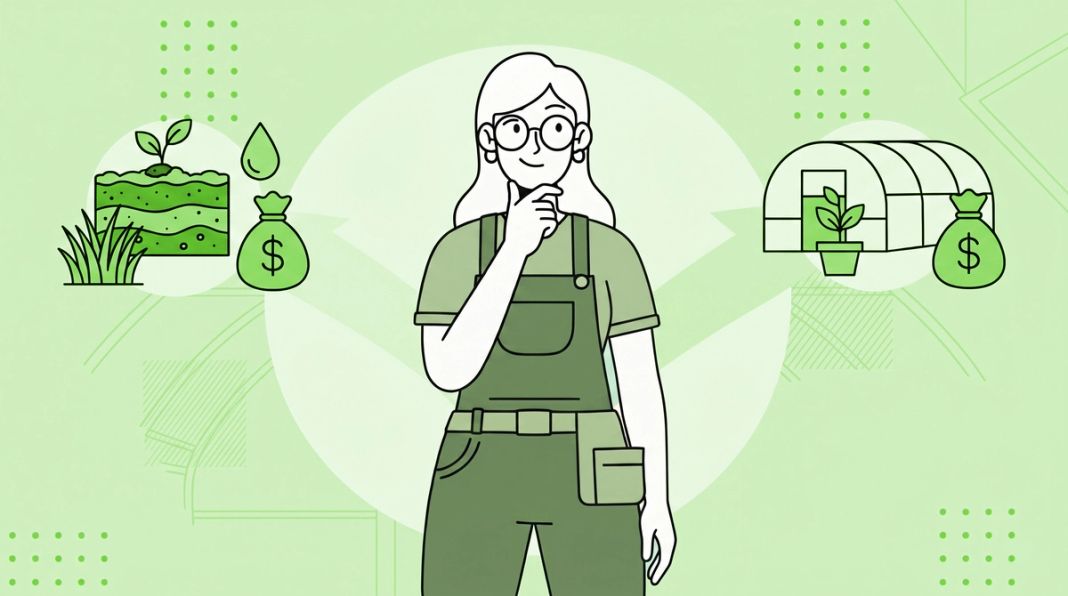
In December 2025, the NRCS announced a new initiative called the Regenerative Pilot Program (RPP) stating that $700 million in funding was being allocated for the Regenerative Pilot Program through the EQIP (Environmental Quality Incentives Program) and CSP (Conservation Stewardship Program) programs.Regenerative Pilot Program (RPP) stating that $700 million in funding was being allocated for the Regenerative Pilot Program through the EQIP and CSP programs.
This announcement caught our attention here at Farmers Friend, because so many market farmers rely on the EQIP High Tunnel Initiative for tunnel grants. We wanted to understand what the new program actually offers and what it means for the high tunnel funding farmers already depend on.
This guide is built to help you:
- Understand what changed with EQIP High Tunnel Initiative funding
- Decide whether the Regenerative Pilot Program is worth applying for
- Know exactly how to apply, what's required, and what the deadlines are
What the Regenerative Pilot Program Means for High Tunnel Funding
The Regenerative Pilot Program is not a new pool of high tunnel funding. It's a program for farmers who want to address broader conservation goals—building soil organic matter, reducing inputs, improving crop rotations—over a longer time commitment.
Choose the Regenerative Pilot Program if you want to tackle systemic resource issues on your farm and are open to bundling several conservation practices into one long-term plan.
Choose the EQIP High Tunnel Initiative if your goal is season extension, you want a straightforward contract for a single structure, and you're not looking to overhaul your whole-farm conservation approach right now.
Pro Tip: The NRCS exists to conserve natural resources, strengthen agricultural production, and keep working lands productive. So by addressing more conservation practices in your EQIP High Tunnel Initiative application, you'll improve your ranking and boost your chances of funding.
In other words, the more conservation practices you address in your High Tunnel application, the higher you’ll be ranked. The fewer conservation practices addressed in your application, the lower you’ll be ranked.
What Is the NRCS Regenerative Pilot Program?
The NRCS Regenerative Pilot Program (RPP) helps farmers build a holistic, results-based conservation plan and pays incentives for implementing it. Here's what sets it apart from a typical EQIP application:
One application covers your whole operation. Instead of applying practice-by-practice, you bundle everything from 1 to 15 eligible practices (see practice list below) into a single application and contract.
It's a 5-year commitment. Contracts run a minimum of five years, with the expectation that at least one primary regenerative practice is fully implemented by the end.
Soil testing is required, and NRCS helps pay for it. You'll test soil health in year 1 and year 5 to establish a baseline and measure change. This is a monitoring requirement, not a pass/fail threshold — your incentive payments aren't contingent on hitting specific soil health numbers.
Payments are practice-based, not just annual. You generally get paid when you complete a given practice, though some practices pay out annually.
It's open to everyone. All experience levels, all 50 states and territories.
Frequently Asked Questions about the Regenerative Pilot Program
It's part of the Trump administration's Make America Healthy Again initiative, aimed at a more holistic, outcomes-based approach to addressing water and air quality, soil health, erosion control, wildlife habitat, and drought resilience.
NRCS has dedicated $700 million for 2026. Funding levels for the Regenerative Pilot Program for 2027 haven't been announced yet.
Any farmer, at any experience level, in any state or territory.
Three things: a Whole Farm Assessment covering all resource concerns, selection of at least one of the 15 Primary Regenerative Management Practices, and soil health testing in years 1 and 5.
NRCS accepts applications year-round, but each state sets a ranking date that determines which funding cycle your application is considered for. The 2026 ranking date was January 15 for all states. If NRCS follows a similar pattern, the 2027 ranking dates could land in mid-January 2027. Individual states will announce their official ranking dates likely between October and December 2026. It’s always best to check with your county’s NRCS District Conservationist for details and deadlines such as this.
You can apply for the Regenerative Pilot Program through your county's local NRCS Service Center, before your state's ranking date.
A minimum of 5 years.
Yes. You'll need to continue testing in at least year 1 and year 5 of the contract, and NRCS can cover those costs.
Ask your local NRCS representative. If a high tunnel is your goal, you’ll likely want to apply through the EQIP High Tunnel Initiative.
Your county's NRCS District Conservationist. They'll visit your farm, conduct a Whole Farm Assessment, and help you build a plan around your specific conservation challenges.
The 15 Primary Regenerative Management Practices
The practices below are the foundation of every Regenerative Pilot Program application. Farmers must build their whole-farm conservation plan around at least one of these 15 NRCS-approved practices, but they do not need to implement all of them.
These 5 practices often align closely with the growing methods and conservation needs of market gardens:
- 340 – Cover Crop: builds organic matter and suppresses weeds between cash crop cycles
- 484 – Mulching: supports moisture retention and weed suppression, a natural fit for intensive market beds
- 590 – Nutrient Management: helps optimize fertility inputs, especially useful if you're trying to reduce synthetic inputs
- 329 – Residue and Tillage Management, No-Till: fits well with permanent bed systems many market farms already use
- 328 – Conservation Crop Rotation: formalizes rotation planning, which most market gardens are already doing informally
The other 10 primary regenerative management practices are: Contour Farming (330), Contour Orchard and Other Perennial Crop (331), Drainage Water Management (554), Forage Harvest Management (511), Forest Stand Improvement (666), Irrigation Water Management (449), Pest Management Conservation System (595), Prescribed Grazing (528), Residue and Tillage Management, Reduced (345), and Stripcropping (585).
What Farmers Should Do Next
If you want high tunnel funding, contact your county's NRCS office about the EQIP High Tunnel Initiative now, so you have time to work with them before the ranking deadline for funding year 2027.
If you're interested in a broader regenerative conservation plan for your farm, ask your county's NRCS District Conservationist about the Regenerative Pilot Program and request a Whole Farm Assessment to get started.
Either way, your local NRCS office is the best starting point — and worth contacting early given possible processing delays.
Who Is Farmers Friend, and Why We Care
Hi, I'm Jonathan, founder of Farmers Friend.
I grew up on our family's market farm, and a lot of my childhood was spent doing the boring, labor-intensive jobs every market farmer knows well — like harvesting spring mix by hand, row after row. Those hours taught me something that's stuck with me ever since: small farms run on the backs of people doing hard, repetitive work with too few tools built for their scale. So I started looking for ways to make those jobs easier, and that habit of problem-solving is what eventually led me to start Farmers Friend.
That's also why we spend so much time tracking industry changes like the Regenerative Pilot Program. NRCS incentive payments and funding shifts can directly affect whether a small farm can afford the infrastructure it needs to grow. Most farmers don't have the bandwidth to dig through NRCS policy updates on top of running their operation. We do that digging so you don't have to, because we know firsthand what it's like to be stretched thin on a market farm.
It's also why we build what we build. Our line of tunnel greenhouses is designed specifically for market farmers, and four of our five tunnels are eligible for NRCS incentive payments.
NRCS-Eligible Tunnels from Farmers Friend
If you're applying for high tunnel funding, several Farmers Friend tunnels are eligible for NRCS EQIP High Tunnel incentive payments.
Farmers Friend Caterpillar Tunnels
- Gothic Caterpillar Tunnel (NRCS Eligible)
- Classic Caterpillar Tunnel (NRCS Eligible)
Farmers Friend High Tunnels
- Guardian High Tunnel (NRCS Eligible)
- Haven High Tunnel (NRCS Eligible)
High tunnels aren’t a magic bullet. Avoid the costly mistakes most first-timers make.
Before you sink cash into infrastructure, let’s talk. Book a free Tunnel Strategy Call with our team to get your personalized tunnel-shopping game plan.
Not sure which model is right for your farm? Compare Farmers Friend tunnels side by side to review your options and see which tunnels are NRCS eligible.
Shop Related Products


Classic Caterpillar Tunnel
5-ft Bow Spacing: 20-ft Length / Standard / 14-ft


In This Article
- What the Regenerative Pilot Program Means for High Tunnel Funding
- What Is the NRCS Regenerative Pilot Program?
- Frequently Asked Questions about the Regenerative Pilot Program
- The 15 Primary Regenerative Management Practices
- What Farmers Should Do Next
- Who Is Farmers Friend, and Why We Care
- NRCS-Eligible Tunnels from Farmers Friend