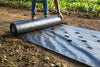
How to Plant Salanova Fast: The System Bountiful Blessings Farm Uses to Plant 540 Heads in 13 Minutes
By Jonathan Dysinger and John Dysinger
Updated on
Show Transcript
0:00Hi guys, Jonathan here with Farmers Friend and we're at Bountiful Blessings Farm with my brother Caleb and we're going to be showing you guys some some
0:08tricks that they use for rapidly planting Salenova. Uh they do thousands of heads of Salenova each year in quick
0:17plant fabric. They've just prepped this field plot, laid down the fabric. So Caleb, what are the tricks of the trade that you guys have developed to do this really efficiently and quickly? Yeah.
0:28So, we're planting into the landscape fabric and these beds have been prepped.
0:32So, we just put out the landscape fabric. Then, we'll water it to make sure that the soil is really moist.
0:38That's a key a key point, especially when you're using the dibbler, which is also very nice when you're using the 200
0:44cell plug trays. So, this dibbler is Yeah, this is a a custom farmer's friend prototype, but this product will be
0:52available pretty soon. the the key with this, you know, it it makes the the perfect size hole for the the little 200
1:00blocks uh plug trays. Um but also, you might wonder why is it in a drill? And the reality is if you just poke it in the ground, uh the the soil will kind of
1:09stick to it and then you won't get a nice clean hole. But when it's actually rotating on that drill, um it it kind of
1:16makes I don't know, just polishes the edges of the hole, I guess you could say, and it Yeah. makes it so collapse
1:24back in. And then the little shoulder on here makes it to where you can just punch it into the ground and not have to worry about getting it just the right
1:32depth. And again, that's just made specifically for that size plug. Yeah,
1:38exactly. Okay. Well, I can go ahead and start dibbling here. So,
1:45[Music]
2:03So, it's a quick process. Um, also we did experiment with like an extended reach to where you could be standing up,
2:11but the challenge with that was although it is easier on your back, it took so much longer um because of having to kind
2:18of aim the the thing being down closer is just much more precise and and rapid.
2:23So yeah. Yeah. So once we dibble, we have our plug trays. Um, one key is we'll drop them. So just like from two
2:31feet or whatever, if you just drop it on the ground, that will help loosen the plugs so that they slide out very easily. Um instead of, you know, it
2:40loosens them from the side walls of the plug tray. And so then we'll just plant using both hands. And you can fit about
2:47we'll do about four at a time. So you're just picking them up like this and holding them in your palms. And then you're just going and then just shifting
2:55them forward and sticking them in the ground. And they really don't have to be babyed. They can just be shoved into the
3:03ground. So, you're shoving it right in the little uh drilled hole, I guess you'd say. Yep. And how how quickly can
3:11one person plant a 50 foot bed here? And I guess let's think about this. You've got
3:18500 500 540 plugs per row bed. And you can do that in 10 minutes, I would say,
3:27pretty easily if it if it's already drilled. Um, the dibbling will take about three minutes per bed. Yeah. And then this Salenova will be ready to
3:36harvest in four weeks. Four weeks. Y at a couple dollars per head. Yeah. I mean,
3:42so 12 $13 a pound. Yeah. So this is why you guys grow so much. It's a cash crop.
3:50Uh they have a a dialed in system,
3:52overhead watering. Y and uh pretty much once you're done here, a little bit of shade you have to get it started. Uh we could show that down there, but um yeah,
4:02once it's planted, you really don't have to do anything until you harvest, right?
4:06Yeah, it's just super easy. Leave it and come back four weeks later and harvest.
4:11So awesome. Thank you, Caleb, for showing this. Yeah, for sure. If you guys want to learn more about these products, go to farmersfriend.com.
4:18[Music]
Bountiful Blessings Farm plants 540 Salanova heads per 50-foot bed in about 13 minutes total using a three-step system: pre-moistened Quick-Plant Fabric, a drill-powered dibbler that creates perfect-depth holes in about 3 minutes per bed, and a two-handed planting technique using 200-cell plug trays that takes roughly 10 minutes. Four weeks later, the lettuce is ready to harvest at $12–13 per pound with almost zero maintenance in between.
Salanova lettuce is one of the highest-value, fastest-turnover crops on a market farm — and at Bountiful Blessings Farm, they grow thousands of heads every year. In a recent video, my brother Caleb walked us through the exact system they use to plant Salanova into Quick-Plant Fabric at speed.
The whole process — from empty bed to fully planted — takes about 13 minutes per 50-foot bed. Here's how they do it.
Step 1: Prep the Bed and Water the Fabric
Before you touch a plug tray, the bed needs to be prepped and the fabric laid down. Then — and this is a key detail — water the fabric thoroughly before you start dibbling.
Moist soil is critical for the dibbler to work properly. In dry soil, the dibbler can't create clean holes — the soil crumbles and collapses. Wet soil holds its shape, giving you a perfect pocket for each plug.
Step 2: Dibble the Holes
The Quick Plant Dibble is a drill-powered planting tool designed specifically for 200-cell plug trays. Attach it to a standard cordless drill, and the spinning action does something you can't achieve by hand: it polishes the inside of the hole as it drills, preventing soil from sticking and collapsing back in.
If you just poke a non-spinning dibbler into the ground, soil clings to it and the hole fills back in when you pull it out. The rotation solves that problem completely.
The built-in shoulder on the dibble acts as a depth gauge — you push until the shoulder hits the soil surface and you've got the exact right depth for a 200-cell plug. No guessing, no inconsistency.
Time: about 3 minutes to dibble an entire 50-foot bed (540 holes).
Caleb mentioned they experimented with an extended-reach handle so you could dibble while standing upright. It was easier on the back, but significantly slower — being down close to the ground gives you better aim and faster repetition. Speed won out over comfort on this one.
Step 3: Plant with Both Hands
Here's the technique that makes planting fast: drop the plug tray from about two feet onto the ground before you start. The impact loosens the plugs from the cell walls so they slide out easily instead of sticking.
Then plant using both hands simultaneously — pick up about four plugs at a time, hold them in your palm, and place them into the dibbled holes one after another. Shift the remaining plugs forward in your hand as you go. The plugs don't need to be babied — just shove them into the holes and move on.
Time: about 10 minutes to plant a 50-foot bed (540 plugs).
What Happens After Planting?
This is the beautiful part of the system: almost nothing.
A little shade cloth for the first few days to help establishment, overhead watering, and then you leave it alone. Four weeks later, the Salanova is ready to harvest. No weeding (the Quick-Plant Fabric handles that), no cultivation, no fuss.
At $12–13 per pound, with 540 heads per 50-foot bed and a four-week turnaround, it's easy to see why Salanova is the workhorse crop at Bountiful Blessings Farm — and why so many market farmers consider lettuce the king of the market garden.
If you're looking to get started with Salanova production, we have a free growing guide based on the exact system Bountiful Blessings Farm uses.
Want to dial in your Salanova system? Subscribe to the Farmers Friend email list for growing guides, product recommendations, and tips from experienced market farmers.
Frequently Asked Questions
Using a drill-powered dibbler and 200-cell plug trays, one person can dibble and plant a 50-foot bed (540 heads) in about 13 minutes total — roughly 3 minutes for dibbling and 10 minutes for planting. The crop is ready to harvest four weeks later with minimal maintenance in between.
The spinning action of a drill-powered Quick Plant Dibble polishes the inside of each hole, preventing soil from sticking and collapsing back in. A non-spinning dibbler leaves rough holes that fill in immediately. The built-in depth gauge also ensures consistent hole depth for every plug.
200-cell plug trays are the standard for Salanova production. The cell size produces a plug that transplants easily and establishes quickly. The Quick Plant Dibble is designed specifically to match this plug size.
Drop the full tray from about two feet onto the ground. The impact loosens the plugs from the cell walls so they slide out cleanly when you're planting. This simple trick eliminates the frustration of plugs sticking in their cells.
Essentially no. The Quick-Plant Fabric suppresses weeds between and around the plants. You may get a few stray weeds in the planting holes, but maintenance is minimal. Plant it, water it, and come back four weeks later to harvest.
At $12–13 per pound with a four-week turnaround and 540 heads per 50-foot bed, Salanova is one of the highest-revenue crops per bed-day on a market farm. The low maintenance between planting and harvest makes the labor-to-revenue ratio especially attractive.
Shop Related Products