How to Grow Year-Round on Your Market Farm: Tips for Your First Winter Production
By Jonathan Dysinger and John Dysinger
Updated on
Show Transcript
0:00Hi guys. In this video, we're going to be going over some tips on how to grow year round. So, Dad, what's your advice
0:07for people that are getting ready to attempt their first winter production?
0:14Timing is critical. And you know, one of our first mistakes,
0:21and this seems so basic now looking back, but I
0:27I was looking at the seed catalogs and seeing the days to maturity and assuming that it was from seeding.
0:38And I'm thinking particularly of things like cabbage and broccoli and stuff. Um,
0:44so I was seeding, you know, counting back my days to maturity and seeding and
0:51then my stuff was not nearly mature enough when the cold weather set in. And
0:59and then I realized then I learned that um some crops the days to maturity on the seed packet is from transplanting,
1:09not direct seeding. So to me, I mean,
1:13that's a little thing, but it's a huge thing. You have to and and that's where cataloges like the Johnny's catalog
1:21comes in handy because for broccoli,
1:26you know, it gives you all this this um culture tips and it says days to maturity from date of transplanting.
1:39So it's it's super important to understanding to if th those days to maturity is from transplanting or direct seeding.
1:47So when it when it's from transplanting they're assuming just what a regular like 4 in or just you know small transplant.
1:58Yeah. Standard size transplant for broccoli or cabbage. You know you're talking 3 4 in tall. So that's a huge thing.
2:08Um, nowadays there's there's a lot of charts and stuff available that weren't available
2:15when when we were starting out, but Johnny's has I think it's called the winter growing guide. You can look up on
2:25their website. It's actually a printable PDF. It's like 10 pages long or something that's very, very helpful. and
2:34they have a chart that um goes from
2:42your you figure out the the last 10hour
2:48day length day which for us is the end of November and then you count back weeks from there
2:56and this chart will tell you when to seed stuff based on that. So I find that very helpful and good information.
3:06So once the day length gets below 10 hours of sunlight, the plants grow the theory is significantly slower.
3:14Yeah.
3:16And I say theory because I I think it's more true way up north for us in Tennessee.
3:24Uh we still get some growth and every winter is so different. You know, it's all about the weather.
3:31Um, if you've got warm weather through the winter, plants are going to grow. So,
3:39this is a starting point, but you have to have kind of a shotgun approach
3:46because you don't know what the winner's going to throw at you. Yeah. So,
3:53okay. So planting at the right time,
3:56transplanting versus direct seeding on the days to maturity. Some crops are direct seed,
4:02some crops are transplanting. So make sure you get that right. And then making sure that your crops, Isn't there kind of a rule of thumb on how, you know,
4:10mature you need them to be by that time where your day length gets below 10 hours?
4:16Yeah, I think people say 3/4 size,
4:21something like that. Again, I think some of those rules as people have gotten into winter growing more, they realize
4:29they're not as rigid as maybe originally stated. You know, again, Elliot Coleman was the pioneer with this. Um,
4:40but yeah, especially any of your heading crops, you want them to get their growth in the fall
4:48um before it really cools down too much. Row covers are a huge thing. You know,
4:57even if you don't have high tunnels, it's amazing what row covers can do. Mhm.
5:03By putting down a row cover and then maybe doubling or tripling it if it gets really cold.
5:10Yeah. You're using wire hoops to keep it up off the crop for most crops. Yes. Yep. Yeah. Okay.
5:17Yeah. And and ventilation.
5:21I think people don't recognize the importance of ventilation. That means,
5:27you know, if you're if you've got tunnels, you want to open them up on sunny days and ventilate off that super
5:35high moisture air. If you just got row covers, you want to pull them back. And yeah,
5:44there's a lot of issues that come from too much moisture in the winter. Mhm. you're going to get disease issues.
5:52Okay.
5:52And then focusing on your cold hearty crops,
5:56you know. I don't know if you remember when we tried to grow tomatoes in here in the winter time. Yeah.
6:03Yeah. It was a It was an expensive disaster.
6:10Well, I mean, we had heat in here and it's double plastic and all that, but you just had to run propane heaters non-stop. Just
6:18we didn't we didn't get enough tomatoes to cover the propane bill and then they
6:26didn't even taste good. So, it's like this is not a good idea.
6:32If you if you make people wait all winter, they'll be ready to pay $5 a pound come spring. Yeah.
6:39grow in season or just extend the season, but don't try to turn it on its head.
6:47Yeah. All right. Any other tips for growing in the winter time?
6:51Well, again, there's a whole lot more that we could say, but those I think are a good place to start.
6:58Yeah. Yeah. I think growing the right types of crops is important and and I think there's so much um lack of
7:07knowledge in this area because you know I'm I know you've had this happen but you tell people that that you farm through the winter and they're thinking
7:15you know how is that even possible? what you know what could you possibly be growing or or you must be heating tunnels a lot and that and I just think
7:23most people don't realize there's a lot of crops out there that can withstand very very cold temperatures and be frozen solid and then just bounce back
7:32when the sun comes out you know so um that's important to to grow the right crops
7:38that are cold hearty I should have brought the books down here but two excellent books
7:47are um Elliot Coleman's the winter harvest handbook that was the original and then JM Fortier's
7:56um the winter market market gardener excellent books with all kinds of information as you get into it deeper
8:06but again don't be overwhelmed by it um start with with just the simple
8:13suggestions we've given and things like spinach, you know, spinach can handle incredible amounts of cold weather.
8:25Just, you know, start somewhere and and you'll be surprised at what can handle winter growing. Yeah. All righty. Well,
8:33I hope this information has been helpful and if you would like to ask a question for us to to answer in a future video,
8:40respond to the email and uh we'll we'll answer it in a future video. Until next time, happy growing.
8:48[Music]
The key to successful winter production is getting your timing right — your crops need to reach roughly three-quarters maturity before day length drops below 10 hours, and you need to know whether "days to maturity" on the seed packet means from direct seeding or from transplanting (it varies by crop). Start with cold-hardy staples like spinach, use row covers even if you don't have tunnels, ventilate on sunny days to prevent moisture-related disease, and stick to crops that actually thrive in cold weather rather than trying to force warm-season crops through winter.
If you've never grown through winter before, the idea can feel overwhelming. Heated tunnels, complicated planting schedules, unfamiliar crops — it's easy to talk yourself out of it before you even start.
But winter production doesn't have to be complicated. Some of the most profitable and satisfying growing you'll do on your market farm happens in the cold months, and you don't need a perfect setup to get started.
My dad, John Dysinger, has been growing year-round at Bountiful Blessings Farm for over two decades — he started winter production in 2003. In a recent video, we talked through the biggest tips and mistakes for first-time winter growers. Here's what you need to know to get started without repeating the lessons he learned the hard way.
What Does Year-Round Growing Actually Mean?
Year-round growing means producing and harvesting crops through all four seasons, including the coldest months of winter. It doesn't mean turning your tunnel into a tropical greenhouse. It means selecting crops that naturally thrive in cold weather, timing your plantings so they mature before growth slows, and using simple, affordable protection like row covers and tunnels to keep those crops alive and harvestable.
People are always surprised when my dad tells them he farms through the winter. They assume he must be heating tunnels constantly, or that there's nothing worth growing. The truth is that there are many crops that can freeze solid, thaw when the sun comes out, and bounce right back — and those crops taste incredible after exposure to cold. It continues to boggle the minds of people in our area that this is even possible, but after 22 years of doing it, I can tell you it absolutely works.
What Is the Biggest Mistake First-Time Winter Growers Make?
Timing. Specifically, misunderstanding days to maturity on seed packets.
This was one of my dad's very first mistakes when he started winter growing, and looking back he says it seems so basic — but it cost him an entire season's worth of heading crops.
Here's the issue: some crops list days to maturity from direct seeding, and some list it from transplanting. If a cabbage or broccoli variety says "65 days to maturity" and that number is from transplanting — not from when you dropped the seed — you need to add several weeks of nursery time on top of that before you even get to 65 days.
My dad was counting back from his target harvest date using the days-to-maturity number, seeding at that calculated date, and then watching his crops fail to size up before cold weather set in. The plants simply weren't mature enough when growth slowed.
The fix is simple but critical: check whether days to maturity is from seeding or transplanting. Johnny's Selected Seeds catalog is especially helpful here — for crops like broccoli, it explicitly states "days to maturity from date of transplanting" in the cultural tips. Once you understand which number you're working with, your planting schedule will make sense.
How Do You Calculate Winter Planting Dates?
The core principle is that your crops need to reach approximately three-quarters (75%) maturity before your day length drops below 10 hours of sunlight.
Below 10 hours of daylight, plant growth slows dramatically. Your cold-hardy crops won't die — they handle the cold just fine — but they essentially stop sizing up. Whatever you've got in the ground at that point is what you'll be harvesting from for the rest of winter.
For us in zone 7 (middle Tennessee), the last 10-hour day falls at the end of November. You work backwards from that date to figure out when each crop needs to go in the ground.
Johnny's Selected Seeds has an excellent free resource for this — their Winter Growing Guide, available as a printable PDF on their website. It's about 10 pages long and includes a chart that lets you look up your last 10-hour day length and count back weeks to determine seeding dates for different crops. My dad finds it very helpful and it's a great starting point.
One important caveat: my dad notes that the 10-hour rule is more rigid in far northern climates than it is here in Tennessee. In our zone, we still get some growth through winter, and every winter is different — a mild winter with warm stretches will keep crops growing more than a harsh one. So treat it as a starting point, not an absolute. You'll need what my dad calls a "shotgun approach" — plant at several intervals because you don't know what the winter will throw at you.
What Crops Should You Grow in Winter?
Stick to cold-hardy crops — the "roots and shoots" category. Spinach, lettuce, kale, carrots, Asian greens, and brassicas are all excellent winter performers. Spinach in particular can handle incredible amounts of cold weather and is a great confidence-builder for a first-time winter grower.
Do not try to grow warm-season crops in winter. My dad has a cautionary tale here. Bountiful Blessings Farm once tried growing tomatoes through the winter in a heated double-plastic tunnel with propane heaters running non-stop. The result? They didn't harvest enough tomatoes to cover the propane bill, and the tomatoes didn't even taste good.
The lesson: grow in season, or extend the season with cold-hardy crops. But don't try to turn the seasons on their head. If you make customers wait all winter for tomatoes, they'll be ready to pay $5 a pound come spring. That's a much better business strategy than burning propane all winter for mediocre fruit.
How Important Are Row Covers for Winter Growing?
Extremely important — and you don't need high tunnels to use them.
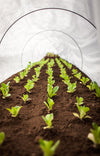
Row covers draped over wire hoops can provide remarkable cold protection even without any larger tunnel structure. You can double or triple the layers if temperatures drop severely. It's amazing what row covers alone can do for extending your harvest window.
If you do have tunnels, row covers inside the tunnel create a critical second layer of protection — what we call the "two-layer system" — that can keep crops alive and marketable through the coldest nights of the year.
Why Is Ventilation Critical in Winter?
This is one that catches a lot of new winter growers off guard. You'd think that keeping everything sealed up tight in cold weather would be the goal, but too much trapped moisture is actually one of the biggest winter growing problems.
On sunny winter days, temperatures inside tunnels can spike and humidity builds rapidly. If you don't ventilate — open the tunnel, pull back the row covers — that high-moisture air sits on your plants and creates disease pressure. Fungal issues in winter are almost always a ventilation problem.
Even with just row covers over outdoor beds, pulling them back on sunny days to let air circulate makes a real difference in keeping your crops healthy through the season.
What Books Should I Read Before Starting Winter Production?
Two essential resources:
Eliot Coleman's The Winter Harvest Handbook — This is the original book on winter growing and still the definitive reference. Coleman pioneered the concept of unheated winter production and laid out the planting schedules, crop selection, and tunnel management techniques that most winter growers use today. My dad has referenced this book for decades.
Jean-Martin Fortier's The Winter Market Gardener — An excellent companion book with detailed information on winter vegetable production for small farms, including crop profiles and cold-season planning tools.
Both are worth having on your shelf. But don't let the depth of information in these books overwhelm you. Start simple — a few crops, some row covers, and good timing — and build from there.
The Takeaway
Winter growing is more accessible than most people think. The keys are timing (get your crops to three-quarter size before day length drops below 10 hours), crop selection (cold-hardy roots and shoots, not warm-season fruiting crops), protection (row covers at minimum, tunnels if you can), and ventilation (open up on sunny days to prevent moisture problems).
Don't be intimidated. Start with spinach. Put up some row covers. Pay attention to whether your seed catalog is counting days to maturity from seeding or transplanting. And trust that crops can handle far more cold than you'd expect.
Your customers — and your winter revenue — will thank you.
Frequently Asked Questions
Yes. Row covers over wire hoops can provide significant cold protection even without a tunnel. You can double or triple layers for severe cold. Many crops like spinach, kale, and carrots can survive hard freezes outdoors with just row cover protection. A tunnel makes winter growing easier and expands your options, but it's not required to get started.
It depends on the crop. For some crops, days to maturity is counted from direct seeding. For others — particularly transplanted crops like broccoli, cabbage, and cauliflower — it's counted from the transplant date, not the seeding date. This distinction is critical for winter planting schedules. Johnny's Selected Seeds catalog specifies which measurement is used for each crop.
Your crops need to reach roughly 75% maturity before day length drops below 10 hours of sunlight in your area. Work backwards from your last 10-hour day (end of November for zone 7) to calculate planting dates. Johnny's Winter Growing Guide, available as a free PDF on their website, provides a chart for calculating these dates based on your location.
Spinach is the single best starter crop — it handles extreme cold and is nearly foolproof. Lettuce, kale, and carrots are also excellent for first-time winter growers. Stick to cold-hardy "roots and shoots" crops and avoid warm-season fruiting crops like tomatoes and peppers.
In most cases, no. Heating a tunnel to grow warm-season crops through winter is extremely expensive and rarely profitable at market farm scale. Bountiful Blessings Farm tried growing heated winter tomatoes and didn't harvest enough to cover the propane bill. A better strategy is to grow cold-hardy crops in unheated tunnels with row cover protection inside.
The most common cause of winter crop disease is excessive moisture from poor ventilation. On sunny days, open your tunnels and pull back row covers to ventilate high-humidity air away from your plants. Sealed, high-moisture environments create ideal conditions for fungal diseases, which are the primary disease threat in winter growing.
Eliot Coleman's The Winter Harvest Handbook is the foundational text — it covers planting schedules, crop selection, tunnel management, and marketing for unheated winter production. Jean-Martin Fortier's The Winter Market Gardener is an excellent modern companion with detailed crop profiles and planning tools for northern climates.
Shop Related Products



In This Article
- What Does Year-Round Growing Actually Mean?
- What Is the Biggest Mistake First-Time Winter Growers Make?
- How Do You Calculate Winter Planting Dates?
- What Crops Should You Grow in Winter?
- How Important Are Row Covers for Winter Growing?
- Why Is Ventilation Critical in Winter?
- What Books Should I Read Before Starting Winter Production?
- The Takeaway
- Frequently Asked Questions