How to Cultivate Weeds on Your Market Farm (Before They Become a Problem)
By Jonathan Dysinger and John Dysinger
Updated on
Show Transcript
0:00Last week we started talking about weeds, primarily prepping beds before you plant. How to kill that that weed
0:07bank, the weed seed bank in your soil and get ready for a successful crop that you're not going to get overrun by weeds
0:14after you've already planted. Um, this week we're going to be talking about cultivation. So, you've prepped, you've planted, and you're most likely going to
0:24well 100% you're going to have weeds that come up. And then how do you deal with them working around your plants,
0:31crops that are already growing? And so we're going to talk about cultivation.
0:37Yeah. And Elliot Coleman is I I consider my mentor through his books and he he says you don't weed, you cultivate.
0:50And so I would just distinguish between weeding. Weeding is dealing with wellestablished weeds. If you can grab onto it and pull
0:59it out, it's a it's gone too far. It's weeding. And that's that's where, you know, a lot of farm kids um decided they
1:09wanted to leave the farm. It doesn't take long on your hands and knees pulling weeds. They had to do that all day. But cultivating is something totally different.
1:20And the key here is understanding that if you can dispatch the weeds, if you
1:28can get rid of them before they're even half an inch tall, it is so simple. But
1:37if you wait, and this is what happens too often, especially with with new gardeners or new market gardeners, um
1:46you know, there's so much to do on the farm that it's like, "Oh, well, we'll leave that for later." And what happens
1:54is the weeds get established and then you've got a real problem on your hands.
2:01So, you got to schedule time for cultivation. Ideally, every week you're
2:06cultivating. And so you're again, if if you can do it on a a sunny day when the
2:16soil is is fairly dry and all you're doing is just trying to
2:23disturb the the top half inch layer of soil. The beauty of the colinear hoe is
2:32that it's it it's not work. Um this this was designed by Elliot Coleman and it's
2:39designed he he compares it to to shaving the ground. So this is your this is your
2:46razor blade here and you're just putting it parallel with the with the ground and you're standing upright. You have your
2:55thumbs up as you're holding it and you're just literally stirring the soil.
3:02And you'll notice, see, we're getting rid of all the weeds here. Weeding concrete is really easy. But,
3:10um, the point is,
3:14you're not bent over. You're not hacking at weeds. You're just literally It's almost like sweeping. Yeah. sweeping or
3:24um he compares it to to dancing. This is your partner here. Says you put on a
3:32Strauss waltz and weeding has never been so civilized. That's what he says. Yeah.
3:38Leave it to Elliot to come up with something romantic.
3:42This works with your beds where where your soil is loose. You know, we've talked about compacted soil. This does
3:51not work well on compacted soil, but once you've loosened your beds, this is a wonderful tool. And you're again,
4:00you're not trying to hack weeds with this. You'll break it if you do that.
4:05But for just stirring the soil, and that's all you have to do to get rid of those tiny weeds, the colinear hoe is
4:13hard to beat. Of course, they have wire weeders. Now, there there are a lot of variations, but I'm just showing you kind of the two basic tools.
4:22And then this is a stirrup hoe. There's different size heads for the stirrup
4:28hoe, but the stirrup hoe works best on harder ground or larger weeds. So, this
4:37one you have to have your thumbs down and you got to be bent over to put some real effort into it. But you're you're
4:46just going back and forth with the stirrup hoe.
4:51And so it's 100% efficient. A standard hoe, you spend most of your time with it in the air, which is not very efficient
5:00at all. But this is 100% efficient and ideally work your way backwards down the
5:07bed or down the aisle. So, we use this on our aisles where you're you're walking and it's going to be more
5:14compacted or for those times when you haven't been able to stay on top of the cultivation
5:23and the weeds are larger, this will deal with with larger weeds much better.
5:30But again, just to emphasize, if you can cultivate before the weeds are even visible,
5:40you know, just know that they're germinating under there. So, just stirring the soil once a week will do
5:47wonders uh to to keep weeds from ever becoming a big issue. Yeah. Cool. So there's a lot
5:56of different techniques for for dealing with weeds. So we're just talking about a couple here. Couple of your favorites.
6:02So the sturupo and colinear hoe that you use come comes from Johnny's. They can be purchased there. And uh there's a lot
6:10of places you can get them, but those are good quality ones that we've used for 27 years. So um you know, you have to
6:18replace blades and replace one every once in a while, but they they hold up good. Um, the other thing that's worth mentioning, you know, with cultivation,
6:26we're talking about terminating weeds. But the other way to do it is just through some sort of mulch, whether that's a landscape
6:33fabric, quick plant fabric that we sell with holes already in it, or, you know, some people are using paper products,
6:39you know, a paper mulch that blocks the weeds. So, I mean, as a rule of thumb,
6:45preventing them is better than having to deal with, you know, getting rid of them after they've already, you know,
6:53sprouted up. So, whether that's, you know, just being really proactive with your cultivation, flame weeding is another option. Again, there's too many
7:02options to really discuss right now, but hopefully this has given the viewers a little bit of a perspective on how some effective ways to deal with cultivation.
7:11And hope this has been helpful. If you have questions like this, feel free to submit them and maybe we'll discuss them in a future conversation. Until next time, happy growing.
7:21[Music]
The secret to weed management on a market farm is cultivation, not weeding — and the difference matters. If you can disturb the top half-inch of soil once a week before weeds are even visible, you'll prevent them from ever establishing. The colinear hoe (designed by Eliot Coleman) handles this effortlessly on loose beds, while the stirrup hoe tackles harder ground and larger weeds. The goal is to cultivate before weeds reach half an inch tall — once you can grab a weed and pull it, you've waited too long.
If you've ever spent a full day on your hands and knees pulling established weeds, you know exactly why so many farm kids decided they wanted to leave the farm. Weeding is miserable, backbreaking work — and it's entirely avoidable if you approach weed management differently.
Last week, we talked about prepping beds and dealing with the weed seed bank before planting. This week, we're picking up where that conversation left off: your crop is in the ground, weeds are going to come, and you need a plan for dealing with them that doesn't involve crawling through your beds with aching knees.
My dad, John Dysinger, has been cultivating at Bountiful Blessings Farm for 27 years. His approach comes directly from Eliot Coleman, who he considers his mentor through Coleman's books. In a recent video, we demonstrated the tools and techniques that make cultivation fast, easy, and — believe it or not — almost enjoyable.
What Is the Difference Between Weeding and Cultivating?
This distinction is fundamental, and it changes how you think about weed management entirely.
Weeding is dealing with established weeds. If you can grab onto it and pull it out, it's a weed — and it's already gone too far. Weeding is slow, labor-intensive, and demoralizing.
Cultivating is disturbing the soil surface to kill weeds before they're even visible — ideally before they're half an inch tall. At that stage, weed seedlings are tiny, fragile, and can be dispatched by simply stirring the top half-inch of soil. No bending over, no pulling, no struggle.
As Eliot Coleman puts it: "You don't weed, you cultivate." That mindset shift is the foundation of efficient weed management on a market farm.
When Should You Cultivate?
Every week. That's the schedule my dad follows, and it's the key to keeping weeds from ever becoming a serious problem.
The most common mistake — especially among new market farmers — is putting off cultivation because there's always something more urgent to do. "We'll deal with the weeds later." But later means the weeds have established root systems, and now you're weeding instead of cultivating. You've turned a five-minute job into an hour-long ordeal.
Even if you can't see weeds on the surface, know that they're germinating underneath. A weekly pass with a hoe keeps the soil surface disturbed enough that weed seedlings never get a foothold.
Two conditions make cultivation most effective:
Pick a sunny day, and make sure the soil is fairly dry. You're uprooting tiny seedlings, and they need to dry out and die after being disturbed. If the soil is wet, those disrupted seedlings can re-root almost immediately — and you've accomplished nothing.
What Are the Best Tools for Cultivation?
My dad uses two primary tools, each suited to different conditions. Both come from the Eliot Coleman school of cultivation and have held up through 27 years of daily farm use.
The Colinear Hoe (For Loose Beds)
The colinear hoe is the workhorse of cultivation on a well-managed market farm. Designed by Eliot Coleman, it's built for one specific purpose: shaving the top surface of loose soil to destroy tiny weeds.
Here's what makes it different from a traditional hoe:
You stand upright. Your thumbs face up on the handle, and the blade sits parallel to the ground. You're not bending over, not hacking, not chopping. You're literally sweeping the soil surface. Coleman compares it to shaving the ground — the blade is your razor, and you're just gliding it across the surface.
My dad says it's almost not work. Coleman goes further — he says to put on a Strauss waltz while you cultivate, because "weeding has never been so civilized."
The colinear hoe works beautifully on beds where the soil is already loose — which it should be if you're following good bed preparation practices. It does not work well on compacted soil, and you'll break the blade if you try to hack at established weeds with it. This is a precision tool for prevention, not a rescue tool for neglected beds.
The Stirrup Hoe (For Hard Ground and Larger Weeds)
When the ground is more compacted — like in your aisles where foot traffic has firmed things up — or when you've fallen behind on cultivation and the weeds are bigger than ideal, the stirrup hoe is your tool.
The stirrup hoe has an oscillating head that cuts on both the push and pull stroke, making it 100% efficient. A traditional hoe spends most of its time in the air between chops, which is remarkably inefficient by comparison. The stirrup hoe is always working.
For this tool, your thumbs face down and you bend into it more — there's real effort involved, especially on hard ground. Work your way backwards down the bed or aisle so you're not stepping on the soil you just cultivated.
You can get different size heads for the stirrup hoe depending on your aisle width and the scale of the weeds you're dealing with. My dad uses it primarily on walkways and for the occasional bed where cultivation fell behind schedule.
What About Other Weed Prevention Methods?
Cultivation is just one piece of the weed management puzzle. As a general rule, preventing weeds is always better than dealing with them after they've sprouted.
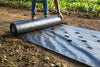
Landscape fabric and Quick-Plant Fabric — For crops where cultivation between plants isn't practical, weed-blocking fabric with pre-burned planting holes keeps beds essentially weed-free for the entire season. This is prevention at its most effective.
Flame weeding — Another option for killing weed seedlings before or just after crop emergence, particularly on direct-seeded beds. A propane torch passes over the soil surface and kills tiny weeds on contact.
Paper mulches — Some growers use biodegradable paper mulch products that block weeds and break down over time. These avoid the sustainability concerns of plastic but don't last as long as woven fabric.
Each approach has its place. On beds where you're cultivating, the colinear hoe and stirrup hoe are all you need. On beds where you want to eliminate weed labor entirely, fabric is the answer. Most farms use a combination of both strategies across different areas of their operation.
The Takeaway
Weed management doesn't have to be the backbreaking, demoralizing part of farming that drives people away. The shift from weeding to cultivating is a shift from reactive to proactive — and it changes everything.
Get a colinear hoe for your loose beds and a stirrup hoe for your aisles. Cultivate every week, on a dry sunny day, before weeds are even visible. And for beds where you want zero weed labor, invest in Quick-Plant Fabric and let prevention do the work for you.
Your knees — and your sanity — will thank you.
Frequently Asked Questions
Weeding is pulling established weeds by hand — slow, labor-intensive work. Cultivating is disturbing the top half-inch of soil to kill weed seedlings before they establish, ideally before they're even visible. Cultivating is dramatically faster and easier, and if done weekly, it prevents most weeds from ever becoming a problem.
Once a week is ideal. Even if you don't see weeds on the surface, weed seeds are germinating below. A weekly pass with a colinear hoe or stirrup hoe keeps the soil surface disrupted enough to prevent seedlings from establishing. Skipping even a couple of weeks can let weeds get ahead of you.
The colinear hoe is a cultivation tool designed by Eliot Coleman for shaving the top surface of loose soil. You hold it with thumbs facing up, blade parallel to the ground, and sweep it across the bed while standing upright. It's designed for killing tiny weeds in loose, prepared beds — not for chopping established weeds on compacted soil.
The stirrup hoe has an oscillating blade that cuts on both push and pull strokes, making it highly efficient. It works best on harder, more compacted ground like walkways and aisles, or on beds where weeds have gotten larger than ideal. Unlike the colinear hoe, it requires more physical effort and a downward grip.
Uprooted weed seedlings need to dry out to die. If the soil is wet, disrupted seedlings can re-root almost immediately, meaning your cultivation accomplished nothing. Wait for a dry, sunny day when disturbed seedlings will desiccate quickly on the soil surface.
Both have their place. Cultivation works well on beds where you can regularly pass a hoe between plants. Quick-Plant Fabric is better for crops where you want to eliminate weed labor entirely — you just plant through the pre-burned holes and the fabric handles the rest. Most farms use a combination of both strategies across different parts of their operation.
Flame weeding uses a propane torch passed over the soil surface to kill tiny weed seedlings before or just after crop emergence. It's particularly useful on direct-seeded beds where you can flame-weed before the crop emerges but after weed seedlings have appeared. It's another prevention tool in the overall weed management toolkit.
Shop Related Products