How to Build Soil Health in Sandy Soil and Get Weeds Under Control
By Jonathan Dysinger and John Dysinger
Updated on
Show Transcript
0:00Hi guys, Jonathan here with Farmers Friend. Today I'm at Bountiful Blessings Farm with my dad, John Dyinger, and we're going to be going over a question
0:08we got from one of our customers when we posed the the question, "How are you feeling about this upcoming growing season?" So, Carol Anne responded and
0:17shared some about her little operation and she's a retired educator with lots of land, most of it natural, unused. She has a small orchard and a garden area.
0:30They've had cattle in the past up to 100 head down to 12 animals with some chickens and horses. She says, "Our soil is garbage, sand, low pH, 5.8 to 6.1ish.
0:42We have weeds galore. I struggle with soil health and have a hard time with even the easiest to grow veggies. But I
0:49refuse to give up. If you could help with anything, it would be soil building. We have a small pasture approximately 4 acres where we are
0:57trying to be very deliberate with cover crops and no till but it's a struggle again weeds are such a big problem.
1:03Target crops are aren't vigorous and weeds are so adaptable. So that's uh
1:10some some struggles that probably most growers have faced. So we're going to talk a little bit about soil health and uh techniques for controlling weeds. So,
1:21what what input would you have for Carol?
1:25Well, you know, soil health is obviously a huge topic and and extremely important one. Without soil health, you're not
1:33going to be much of a gardener or farmer. And I do sense that she's Carol is not trying to do this for a living,
1:41at least at this point. She's just more of a homesteader.
1:46Um, you know, I guess my first thought is you're you've got your hands in a lot of things with cattle and chickens and
1:54horses and um, so you may at some point have to kind of decide what you really
2:00want to focus on. But when it comes to soil health, obviously sand doesn't hold nutrients very well. So
2:08ideally you've got to to build that soil either through adding organic matter or
2:16some people on a small scale um add clay to sand. So that is a possibility. Um but you got to do
2:24something to give the nutrient something to hold on to and the water. So, you
2:31know, I I can't really say too much more than that, but just get a good soil test. Know where you're at. Um, you
2:40know, I know with sandy soil, we do not have sandy soil, so I haven't dealt with that personally, but I know you kind of have to spoon feed the plants a little
2:49more. You know, one thing I would encourage Aea, Advancing Ecological Agriculture, John Kemp's organization
2:58has some great fertilizer and uh biological things you can you can spray
3:06and we've had really good success with that. So, more focused on feeding the
3:14plant than just generally balancing soil. Is that kind of the approach?
3:20Well, I would say you probably are going to have to do some of that um in the short term at least until you can build
3:28that soil up some. You know, once you get some organic matter in there and you know, potentially possibly some clay
3:37that's going to hold the nutrients, then you know, you can really start building the soil. So, when you say organic
3:46matter, talking about things like um putting in compost, what about like compost, Pete Moss? Pete moss. Again,
3:54that's somewhat controversial, but we definitely, you know, especially in hoop houses, we use Pete Moss because it doesn't throw your fertility off. Yeah.
4:06And that that's I mean, I know I've had personal success using Pete Moss just to try to loosen up. I mean, around here we have a lot of like clay soil. It really
4:15can can make the soil much more workable. It's the quickest way to turn soil into something
4:23that has what, you know, they call tilt a little bit. Yeah. I mean, it it gives it really good structure. Yeah. She
4:31mentioned using cover crop. So, what value do you think that has in this scenario? Well, cover cropping is great
4:38on many levels. Uh, you know, it's not a quick fix. I would say that for sure.
4:44You know, it would take a number of years to really, but I mean, it's it's a great place to start. She talks about a
4:51small pasture approximately 4 acres, you know, from a market gardening perspective. 4 acres is a lot. I mean, I
5:00think we only what a couple years did over four acres maybe. Yeah. At the peak, back when we were just doing
5:06winter growing. Yeah. Yeah. it. That's a lot to to be working. Um, so yeah, cover
5:14crops are great, but again, it's it's going to take you some years to build that soil up through just cover
5:22cropping. Yeah. Um, okay. So, weed control. The she's struggling with copious amounts of weeds um that are
5:30choking out veggies that she's trying to grow. So, what's the the recommendation for that? I mean, there's a lot of ways
5:38you can go with weed control. None of them are easy. There's no simple solutions. I mean, probably the easiest
5:45is silage tarps. Just, you know, laying down a silage tarp, cutting whatever's there, wetting it down, and then
5:54covering it with a silage tarp with lots of sandbags because they like to blow around. Yeah. But, um, that can do a
6:04great job. In fact, one thing we've done with a lot of success is if you're trying to really eradicate weeds, cover
6:12it long enough to kill whatever weeds are there initially and then take it off for a few days or up to
6:21a week and let new weeds sprout and then cover it back up again. And you do that
6:28two or three times and that can do a great job of eliminating the weeds in the top couple surface level. Yeah.
6:38Yeah. And then um I think she also mentioned uh trying to do some no till.
6:44Um, you guys have had some some good success the last couple years with doing cover crops, uh, terminating the cover
6:52crop and then laying down landscape fabric, uh, quick plant fabric, planting directly through that. So, that might be an option for her as well. Yeah, that's
7:01that's definitely a a good way to go, at least from our experience. you know, you got to knock the cover crop down or if
7:09you have a flail mower or something like that, you can can mow it down. Um, tarp
7:16it to kill it because depending on what stage it's at, it's not always easy to kill. Yeah. And then, um, once it's
7:24dead, then you put down the the landscape fabric, the quick plant, and plant through the holes. And with your
7:32sandy soil, it's not going to be hard at all to Yeah. plant into residue. And you you'll get a few weeds, stray weeds in
7:40the hole, but it's a whole lot better than, you know, having to weed everywhere. Yeah. Walking down a bed and
7:48pulling a a handful of weeds out of the the hole in the fabric is a lot easier.
7:55Um, for sure. So, I mean, I think when it comes to weeds, it's all about preventing them. um you know, unless you
8:02just want to spend a ton of time out there cultivating or, you know, on your hands and knees pulling weeds, you have to just prevent it from being a problem
8:11in the first place. So, knocking down that seed bankank uh that weed pressure with silage tarps, and then when you
8:19actually get to planting crops, using fabric to to eliminate the ability of weeds
8:27growing up around your plants, not only will you get, you know, not have to spend a bunch of time weeding, but you get uh better crop yields because your plants aren't vying for the nutrients,
8:37you know, the little bit of nutrients that you have. You want your plants to be able to get it, not not all your weeds. So, um, yeah, I think those are great suggestions.
8:47Yeah. Anything else?
8:49Um, as far as weeds, yeah, I mean, it's all about getting them when they're young, not letting them go to seed. And yeah, and
8:58no till is great because you're not bringing up more seeds. So if if you can keep from disturbing that soil deeply,
9:07you can fairly quickly eradicate the large majority of the weeds in the top inch or two. Yep. I don't remember, you
9:16know, I don't know where the saying originally came from, but I remember you just drilling into us as kids, one year's seeding is seven years weeding.
9:25So, you know, we always had to keep all the perimeter around all the fields mowed. uh you know, it always kills me when I go visit farms and they've got just tall grass going to seed, you know,
9:35just a few feet away from their field.
9:38Um and all that's just going to be blowing in. So, yeah, keeping that perimeter around your gardens um mowed and and cut back is important so the
9:46weed seeds don't just blow right in. As the saying goes, an ounce of prevention is worth a pound of cure. Yep. Yep. So,
9:55so yeah, those are some suggestions.
9:58Uh, oh yeah, back to fertility for just a second. I the one thing I would say you are definitely going to need to add
10:07is nitrogen and some some organic form of nitrogen, whether it's feathermeal or or
10:16um alalfa meal or there's a number of other choices depending on what your
10:22soil what else your soil needs. But um I would guess the reason why your plants
10:29aren't growing very well, the main reason would be a lack of nitrogen. So that's where you can start. What else
10:36you need, it's hard for me to say for sure. Yeah. But organic matter and nitrogen.
10:44Well, we hope this information has been helpful to you and and everybody else who's watching. And if you have some burning questions that you've been thinking about as you've been watching,
10:53feel free to click the link below and submit a question. Maybe we'll discuss it in a further convers in a in a future conversation. But until next time, happy growing.
If your sandy soil won't grow healthy vegetables, the core problem is that sand doesn't hold nutrients or water. The fix is adding organic matter — compost and peat moss are the fastest options — to give nutrients something to cling to and give the soil structure. For weeds, prevention is everything: use silage tarps to knock down the weed seed bank before planting, then plant through landscape fabric to keep weeds from competing with your crops. One year of weeds going to seed means seven years of weeding.
A customer named Carol Anne recently shared a struggle that resonated with us: "Our soil is garbage — sand, low pH, 5.8 to 6.1. We have weeds galore. I struggle with soil health and have a hard time with even the easiest-to-grow veggies. But I refuse to give up."
That last sentence matters. If you've got the determination to keep going despite terrible soil and overwhelming weeds, you've got the most important ingredient. The soil and weed problems are solvable — they just require a systematic approach.
My dad, John Dysinger, has been building soil and fighting weeds at Bountiful Blessings Farm for 27 years. His soil is heavy clay, not sand, but the fundamental principles of soil building apply regardless of what you're starting with. Here's his advice for Carol Anne — and anyone else dealing with poor soil and persistent weed pressure.
Why Won't My Vegetables Grow in Sandy Soil?
Sand has two fundamental problems for growing: it doesn't hold nutrients, and it doesn't hold water. Nutrients leach straight through, and water drains away before roots can absorb it. Your plants are essentially starving and dehydrated even when you're fertilizing and watering.
The solution is the same whether you're dealing with sand, degraded pasture, or any other poor soil: get organic matter into the ground. Organic matter is what gives soil the ability to hold onto nutrients and moisture. Think of it as the sponge that keeps everything in place long enough for your plants to use it.
Without organic matter, you're essentially trying to grow in a sieve. No amount of fertilizer will help if it washes through before the plants can take it up.
How Do You Build Sandy Soil Quickly?
Add Compost
Compost is the most obvious soil builder — it adds organic matter, feeds soil biology, and introduces nutrients. But there's a caveat: know what's in your compost. Manure-based compost can be high in phosphorus, and if your soil already has nutrient imbalances, adding the wrong compost can make things worse. Get a soil test before applying heavily so you know what you're working with.
Add Peat Moss
Peat moss is my dad's go-to for quickly improving soil structure, especially in situations where you need to add a lot of organic matter without throwing your fertility off balance. Unlike compost, peat moss is relatively nutrient-neutral — it won't skew your phosphorus, potassium, or other levels. It just adds volume and structure to the soil.
For serious soil building, spread 2 to 3 inches of peat moss and incorporate it as deep as possible. The improvement in soil workability — what growers call "tilth" — is dramatic and fast. It gives sandy soil something to hold onto and gives clay soil space to breathe.
There's some debate about peat moss sustainability (extraction rates in Europe, methane concerns), so do your own research on that front. But from a purely practical standpoint, it's the fastest way to turn struggling soil into something workable.
Address Nitrogen First
If your plants aren't growing vigorously, my dad's best guess — especially in sandy soil — is that nitrogen is the primary limiting factor. Sandy soil leaches nitrogen faster than any other nutrient, so even if you've fertilized, it may not be sticking around long enough for your plants to use.
Add an organic nitrogen source: feather meal, alfalfa meal, or other options depending on what your soil test says you need. This, combined with organic matter to help retain it, should produce a visible difference in plant vigor.
Consider Foliar Feeding
For the short term, while you're building your soil, my dad recommends looking into foliar feeding programs. John Kempf's organization, Advancing Eco Agriculture, has fertilizer and biological products that you spray directly onto plants and soil. The approach focuses on feeding the plant directly while you work on long-term soil building — it's a bridge strategy that can keep your crops productive while the deeper soil improvements take effect.
Spoon-Feed Sandy Soil
One practical adjustment for sandy soil specifically: you'll likely need to fertilize more frequently in smaller amounts rather than applying everything at once. Heavy applications leach through sand too quickly. Lighter, more frequent applications keep nutrients in the root zone longer. Think of it as spoon-feeding rather than serving a buffet.
How Do You Get Weeds Under Control?
Carol Anne's other big challenge — weeds choking out her vegetables — is a problem that compounds the soil issue. When weeds and target crops are competing for the same limited nutrients in poor soil, the weeds usually win because they're better adapted to marginal conditions.
The answer isn't more weeding. It's prevention.
Knock Down the Weed Seed Bank with Silage Tarps
Before you plant anything, use a silage tarp to kill existing weeds and flush the weed seed bank in your planting area.
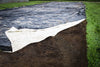
Cut or mow whatever's growing, wet the area down, and cover it with a silage tarp weighted with plenty of sandbags (they like to blow around). Leave it long enough to kill everything underneath. Then take it off for a few days to a week, let a new flush of weed seeds germinate, and cover it back up again. Repeat this two or three times and you'll eliminate the vast majority of weed seeds in the top couple inches of soil.
This is the stale seedbed technique adapted for heavy weed pressure, and it works.
Plant Through Landscape Fabric
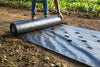
Once your weed seed bank is reduced, plant your crops through Quick-Plant Fabric or another woven landscape fabric. The fabric blocks weeds from establishing between and around your plants. You'll still get a few stray weeds in the planting holes, but walking down a bed and pulling a handful of weeds from the holes is a world away from battling weeds across every square inch of exposed soil.
In sandy soil specifically, fabric has an added benefit: planting through it is easy because the soil is soft enough to work through the holes without any struggle.
And here's the profitability angle: every weed that grows is competing with your crops for the limited nutrients in your soil. When nutrients are scarce, you need every bit going to your plants — not to pigweed and chickweed.
Embrace No-Till to Stop Bringing Up More Seeds
Carol Anne mentioned trying no-till, and my dad thinks that's a smart direction — especially for weed management. Every time you till or deeply disturb the soil, you bring up a new layer of weed seeds from below. If you can keep from turning the soil deeply, you can fairly quickly eradicate the large majority of weeds in the top inch or two.
The workflow that's been working well at Bountiful Blessings Farm: grow a cover crop, terminate it (flail mow or tarp), then lay down Quick-Plant Fabric and plant through the holes. No tilling, minimal weed seeds brought to the surface, and the cover crop residue feeds the soil as it decomposes.
Keep Your Perimeter Mowed
One more thing — and this is something my dad drilled into us as kids: one year's seeding is seven years' weeding. Don't let weeds go to seed anywhere near your growing areas. Keep the perimeter of your fields mowed so weed seeds aren't blowing into your beds from tall grass just a few feet away.
It always frustrates my dad when he visits farms with beautiful beds surrounded by waist-high grass going to seed. All that seed is heading straight for your growing area. Mow it.
The Takeaway
Poor soil and heavy weed pressure are two problems that feed each other — weak soil grows weak crops that can't compete with weeds. Breaking the cycle requires attacking both at once.
Build your soil with organic matter (compost and peat moss), address nitrogen deficiency directly, and consider foliar feeding as a bridge while your soil improves. Knock down your weed seed bank with silage tarps before planting, use landscape fabric to prevent weeds around your crops, and keep your perimeter mowed so new seeds aren't constantly blowing in.
It's not a quick fix, and Carol Anne is right that it's a struggle. But the determination she has — refusing to give up — is the part that can't be taught. The rest is just technique.
Frequently Asked Questions
Sand doesn't hold nutrients or water — both leach through before plants can absorb them. The solution is adding organic matter (compost, peat moss) to give the soil the ability to retain moisture and nutrients. Without organic matter, fertilizing sandy soil is like pouring water through a sieve.
Incorporate 2–3 inches of peat moss as deep as possible for an immediate improvement in soil structure and tilth. Peat moss is nutrient-neutral, so it won't throw your fertility off balance. Follow up with compost for additional nutrients and biology. Sandy soil should also be fertilized more frequently in smaller amounts, since nutrients leach quickly.
Organic nitrogen sources include feather meal, alfalfa meal, blood meal, and other plant or animal-based amendments. Sandy soil leaches nitrogen faster than other soil types, so apply smaller amounts more frequently rather than one large application. A soil test will confirm whether nitrogen is your primary deficiency.
Use a silage tarp to kill existing weeds, then remove it briefly to let new seeds germinate, and tarp again. Repeat two or three times to flush the weed seed bank. When you plant, use Quick-Plant Fabric to prevent weeds from establishing around your crops. Avoid deep tilling, which brings up new weed seeds.
Yes. Every time you till, you bring a new layer of dormant weed seeds to the surface where they germinate. No-till keeps those seeds buried. Combined with cover crops, tarping, and landscape fabric, a no-till approach can dramatically reduce weed pressure within a few seasons.
If you allow weeds to go to seed — even once — those seeds can persist in the soil for seven years or more, germinating season after season. This is why preventing weeds from seeding is more important than pulling individual weeds. Keep field perimeters mowed and never let weeds near your growing area go to seed.
It's possible on a small scale — adding clay gives sand particles something to bind to, improving nutrient and water retention. But it's labor-intensive and impractical for large areas. Adding organic matter (compost and peat moss) is generally more practical and provides additional benefits like feeding soil biology.
Shop Related Products