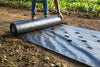
Show Transcript
0:00Hi guys, Jonathan here and we are at Bountiful Blessings Farm. I'm with my dad John and we're going to show you a couple quick tips on how to deploy
0:08landscape fabric or our quick plant fabric and how to do that most efficiently and effectively to maximize the use of your time in, you know, we're
0:17here at the farm in May. It's a busy time of year. Everything has to happen quickly and efficiently. And so this is
0:24a process that they use here that they can quickly deploy the landscape fabric and plant into it, but then not have
0:34to worry about a bunch of weeds in a few weeks. So, uh, Dad, do you want to talk about this? Sure. I mean, there's a lot
0:43to say, but we'll try to summarize it here. You know, I I know a lot of people think it's a lot of work to use
0:51landscape fabric, and there's no denying it takes some work to get it laid out and stapled in. But, um, you know, when
1:00you think of all the work that you're saving from from cultivating later on, I think it
1:06quickly pays for itself and and it's a lot less work in the long run.
1:13So, I think in another video we'll talk a little more about bed prep, but for for here we're we're going to be planting lettuce.
1:24Um, we would just, you know, depending on what the previous crop was, we're going to just,
1:32um, run over it with a wheel ho or something to get out any big stuff, rake
1:39it, tilt it. Sometimes, you know, we find for planting, we use 200 count plugs for for lettuce.
1:49So just running over it quick with the tilther adding any amendments, you know,
1:55of course that varies on the time of the year, but then um just having everything cut to the right length. This is where
2:03standardization comes in. So the the thing that we're doing here is not rolling it up. So these are all, like
2:11you said, cut to length 50-foot uh field plots around the farm here. So everything's already cut to length. And when you cut it, make sure you cut it
2:19with a few inches, you know, 8 or 10 inches longer than the bed. Uh cuz it will over time shrink and if you don't
2:27give yourself, you know, that maybe say 8 to 12 in of extra, you know, the first year you can just fold that under or
2:34roll it up at the end. Uh but it will shrink over over the years and uh that'll give you that extra to continue to be able to cover the full bed plot.
2:43Um, but once you've cut it and used it and you've, you know, maybe put it back up in the barn, rolling it up will make
2:52it harder and more timeconuming to lay it out next time you go to use it. So,
2:56what they do here on the farm is just folding. Um, so you can see here basically they would have it laid out and you just grab one end, fold it back to the the beginning. Ranger, come here.
3:08And then just continue to fold it onto itself. And then you'll see here in a second how easy that makes it to deploy.
3:15Um Dad, maybe you and I can just do this. Okay. So, you know, just lay it down here. One person kind of holds on
3:22to to the one end. So, you'll notice that I mean, we do fold it or roll it
3:29right at the end. We find it comes undone less often, you know. So, just the last
3:36couple feet we'll roll it up, but that's it. Yeah. And so then you want me to pull it out? Yeah. Okay.
3:45So with it being folded, it just kind of un unfolds as you pull both or you pull one end and hold the other end. And
3:53that's just the easiest way to deploy the quick plant fabric. Um and then again to fold that back up, you you want
4:01to just quickly show that process. Just pull it back here and we can show just how easy it is to just fold it back up.
4:15So yeah, anyway, and you can either fold it from fold it back depending, you know,
4:25kind of going back and forth.
4:30So that's the the easiest way to store it and then redeploy it. Uh, of course,
4:36if you're folding it up, you would be taking the staples out. Um, which is a little bit timeconuming,
4:42but again, all of the work that you're doing to uh lay down this fabric will be
4:50saved uh multiple times over. And then at this point, you would just roll it up so it's it holds together a little better. Yeah. Um, cool.
5:02And then I think the last little tip is we find rubber mallets are the easiest for pushing it in.
5:14Yeah. If if your soil's really soft, they can just go in by hand.
5:20Sometimes it just seems faster and easier
5:28just so yeah, as far as the time that it takes to do this, they have just done what is this? Eight or yeah, eight eight
5:38beds in this field plot. Um, and laid down all of this fabric in about 30 minutes. I think they started right around 7:30 when we got here. So about
5:4630 minutes to cover this this whole field plot and get it ready for planting with quick plant fabric. So pretty
5:54efficient and effective way to prep a field plot for planting and also save you a lot of headache in the weeks and months down the road not having to weed.
6:05So a tip for you growers out there. Any ending thoughts, Dad?
6:11No, it's uh yeah, you know, game changer in farming. There's there's no uh silver
6:20bullets, you know, it's there's it's work no matter what. So, you either do your work up front and laying down
6:28fabric or you're going to be doing your work um through the growing cycle by cultivating. Yeah. Yeah. But let's say
6:36it takes you an hour to, you know, lay down the fabric, prep for planting, and maybe an hour to pull it back up and and store it. Um, well, it's not going to do
6:45that for a plot this size. Yeah. But an hour total, right? Even if it did though, that's still a lot less than having to cultivate every few days. So,
6:56definitely a win in the long run. And if you guys are interested in utilizing this product, learning more about the system, go check out our website,
7:03farmersfriend.com, and go to the quick plant page or reach out to our customer service team by clicking the support button at the top of the page.
7:12[Music]
The trick to fast fabric deployment is folding, not rolling. When you store Quick-Plant Fabric by folding it accordion-style onto itself, one person can pull it out in seconds — it unfolds as you walk. Rolling makes it fight you on redeployment. Cut all fabric to standardized lengths (with 8–12 extra inches for shrinkage over time), fold the last couple feet into a roll so it stays together in storage, and use a rubber mallet to push staples into harder soil. Bountiful Blessings Farm covers an eight-bed field plot in about 30 minutes.
A lot of growers assume that laying down landscape fabric is too much work to be worth it. And yes, it takes effort up front. But when you compare the time spent deploying and removing fabric against the weeks of cultivation you'd otherwise be doing, the math isn't even close.
At Bountiful Blessings Farm, they've developed a system for deploying Quick-Plant Fabric that makes the process fast enough to cover an entire eight-bed field plot in about 30 minutes. Here's how they do it.
The Key: Fold, Don't Roll
This is the single biggest time-saving tip, and it's counterintuitive. Most people's instinct is to roll landscape fabric onto a core when storing it. But rolled fabric is a pain to redeploy — it wants to curl, it's hard to keep straight, and you're constantly fighting it as you unroll.
Folding is dramatically faster. Here's the process:
When you take the fabric off a bed, grab one end and fold it back to the starting point — accordion-style, back and forth onto itself. Keep folding until the whole piece is stacked in a neat pile. Then roll just the last couple of feet into a tight roll so the whole bundle stays together in storage.
When it's time to redeploy: one person holds the starting end, the other walks down the bed pulling the fabric. It unfolds naturally as you walk — no fighting, no curling, no wrestling with a tight roll. The fabric lays flat almost immediately.
It's one of those small process discoveries that saves real time every single deployment, across every bed, all season long.
Cut to Standardized Lengths (With Extra)
At Bountiful Blessings Farm, all field plots are standardized at 50 feet. All fabric is pre-cut to match — but with 8 to 12 extra inches beyond the bed length.
Why the extra? Landscape fabric shrinks slightly over time with UV exposure and repeated use. If you cut it to exact bed length the first year, it'll come up short by the second or third year. The extra length gets folded under or rolled up at the ends in the first season, and gradually you'll use all of it as the fabric contracts.
This is the kind of detail that saves you from buying new fabric prematurely. A few extra inches at the cut costs you nothing and extends the usable life of each piece.
Stapling: Rubber Mallet or By Hand
Once the fabric is laid out, pin it down with landscape staples. In soft, well-prepared soil, staples push in by hand. In firmer soil, a rubber mallet makes it faster and easier — just tap each staple in rather than trying to force it by hand.
It's a small tool choice that reduces hand fatigue significantly when you're stapling down eight beds in a row.
The Time Math
Bountiful Blessings Farm covered an entire eight-bed field plot — fabric deployed, stapled, ready for planting — in about 30 minutes. Even if you estimate an hour total including fabric removal and storage at the end of the season, that's still dramatically less time than cultivating those same beds every few days for the entire growing cycle.
As my dad puts it: there are no silver bullets in farming. It's work no matter what. You either do your work up front by laying fabric, or you do your work through the growing season by cultivating. But the up-front option is a lot less total work — and once the fabric is down, the bed is essentially on autopilot until harvest.
The Takeaway
Deploying landscape fabric doesn't have to be slow or frustrating. Fold instead of rolling for fast redeployment. Cut to standardized lengths with shrinkage allowance. Use a rubber mallet for stapling. And remember that 30 minutes of fabric deployment replaces weeks of cultivation labor.
The work you do today saves you work for the rest of the season. That's a trade worth making every time.
Frequently Asked Questions
Fold it accordion-style. Rolled fabric fights you on redeployment — it curls and won't lay flat. Folded fabric unfolds naturally as one person walks down the bed pulling it. Roll just the last couple of feet to keep the bundle together in storage.
Cut your fabric 8 to 12 inches longer than the bed. Landscape fabric shrinks slightly over years of UV exposure and use. The extra length folds under in the first season and gradually gets used as the fabric contracts, extending its usable life.
At Bountiful Blessings Farm, an eight-bed field plot takes about 30 minutes to cover with Quick-Plant Fabric — including laying, positioning, and stapling. That 30-minute investment eliminates weeks of cultivation labor through the growing season.
Yes. Even including deployment and removal time, fabric saves significantly more labor than the cultivation it replaces. You'd spend more time cultivating every few days across a growing season than you spend on fabric handling at the beginning and end. Once the fabric is down, the bed requires almost no weed maintenance until harvest.
Use a rubber mallet. In soft, prepared soil, staples go in by hand. In firmer ground, tapping them in with a rubber mallet is faster, easier, and reduces hand fatigue — especially when you're stapling multiple beds in succession.
Shop Related Products